3 (Stealth)

Utilizing Copilots & low-code functionalities to streamline workflows automation & AI agents building

3 (Stealth)
Product Design
UX Architect
Co-founders
Data Scientists
ML experts
Developers
In progress on ad-hoc basis

About

3 is a stealth startup developing an AI-native platform that enables users to build, orchestrate, and debug automated workflows using natural language, visual programming, and third-party integrations. The vision is to make workflow automation accessible to both technical and non-technical users, combining conversational AI, low-code interfaces, and intelligent orchestration into a single product experience.

Details are limited by an NDA. This case study focuses on the product concept, interaction model, and design decisions.

Challenge

Workflow automation platforms have become increasingly powerful, but they remain difficult to use. Building automations typically requires users to understand triggers, integrations, branching logic, APIs, and debugging processes before creating anything useful. That steep learning curve limits who can benefit from automation and how quickly they can get there.

The opportunity was to rethink automation around intent rather than configuration. Instead of manually assembling workflows step by step, users should be able to describe what they want to achieve, and let AI generate a structured solution they can review, refine, and execute.

But a fully autonomous approach introduced its own risks.  Without transparency and control, users couldn’t trust what the system produced, and trust in automation is everything.

That tension shaped the central design question: how might we simplify workflow automation while ensuring users remain in control of AI-generated solutions?  The platform needed to combine five capabilities into a coherent experience:
AI-assisted workflow generation
Visual workflow editing
Agentic task orchestration
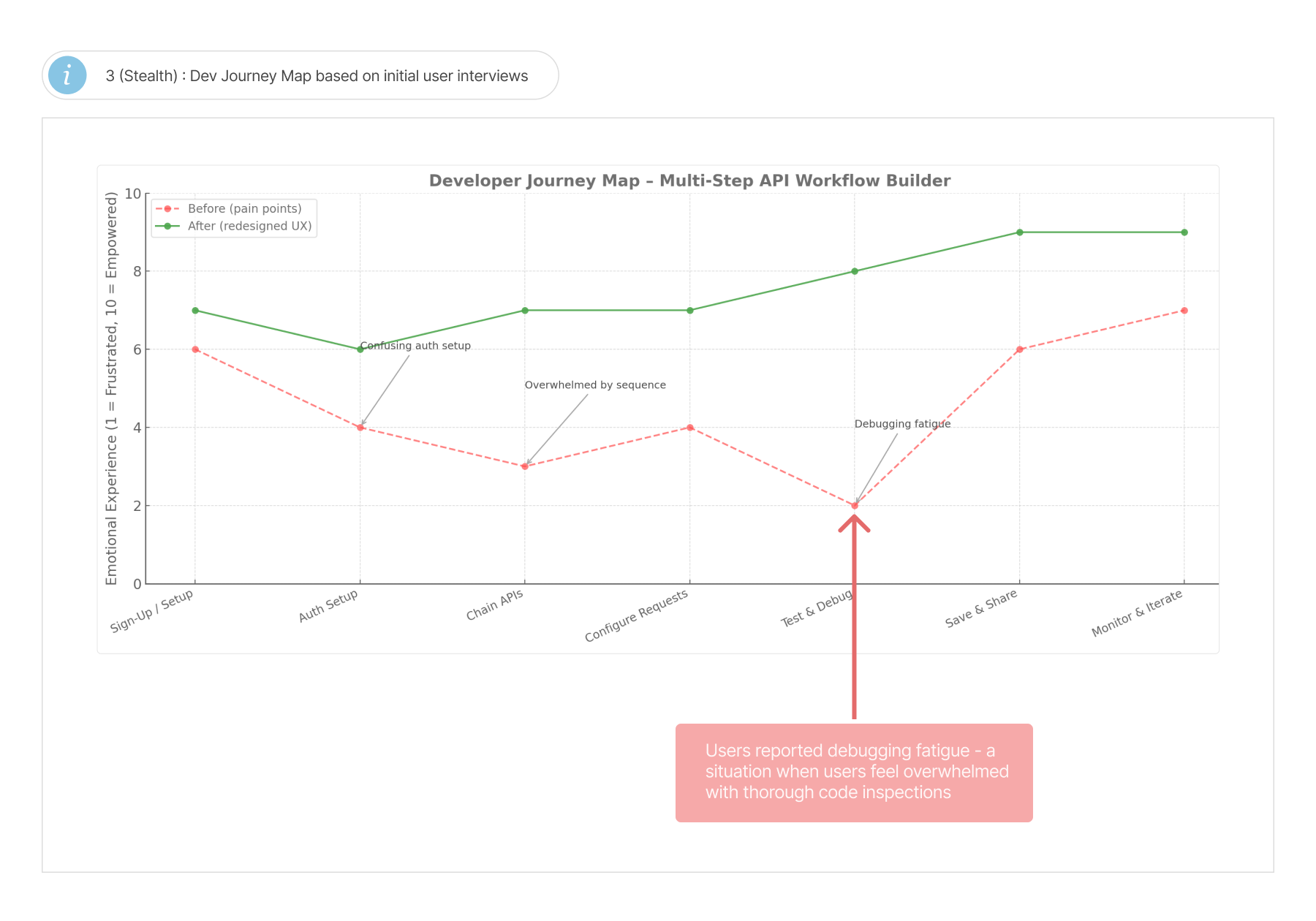
AI-assisted debugging
Human-in-the-loop review and approval

Solution

I produced a high-fidelity 0→1 product concept that brings conversational AI and visual workflow orchestration together into a single, cohesive experience.

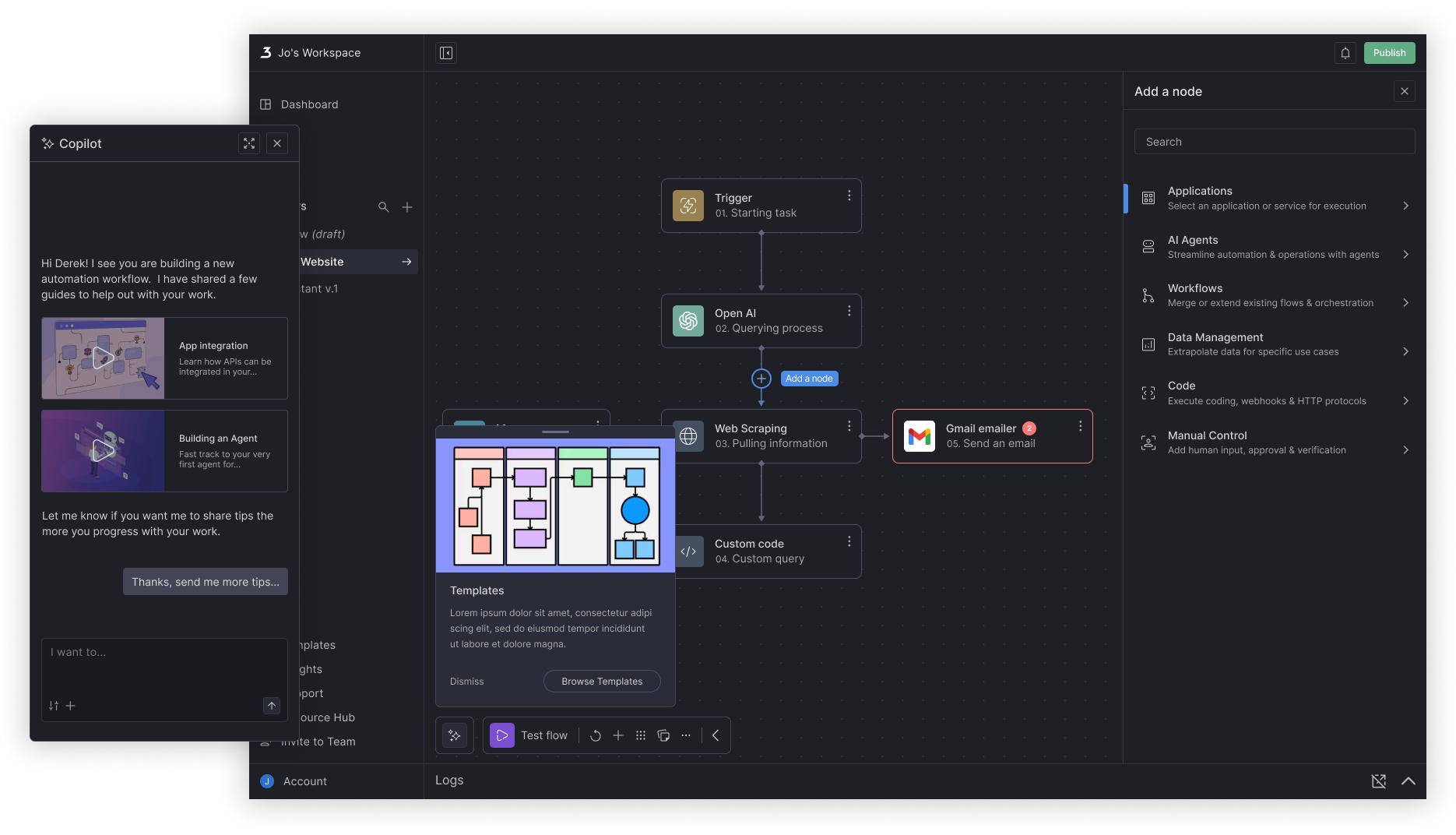
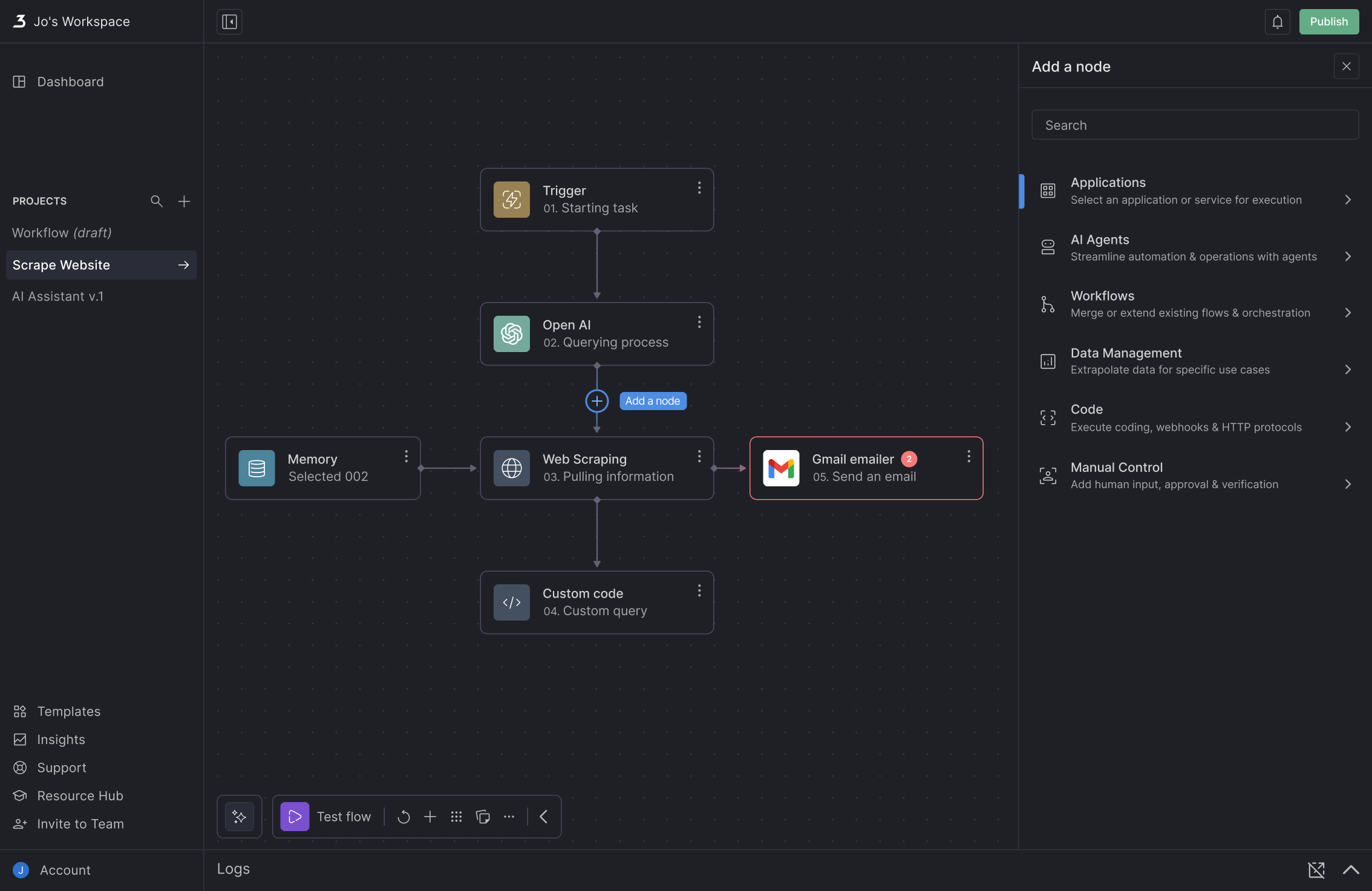
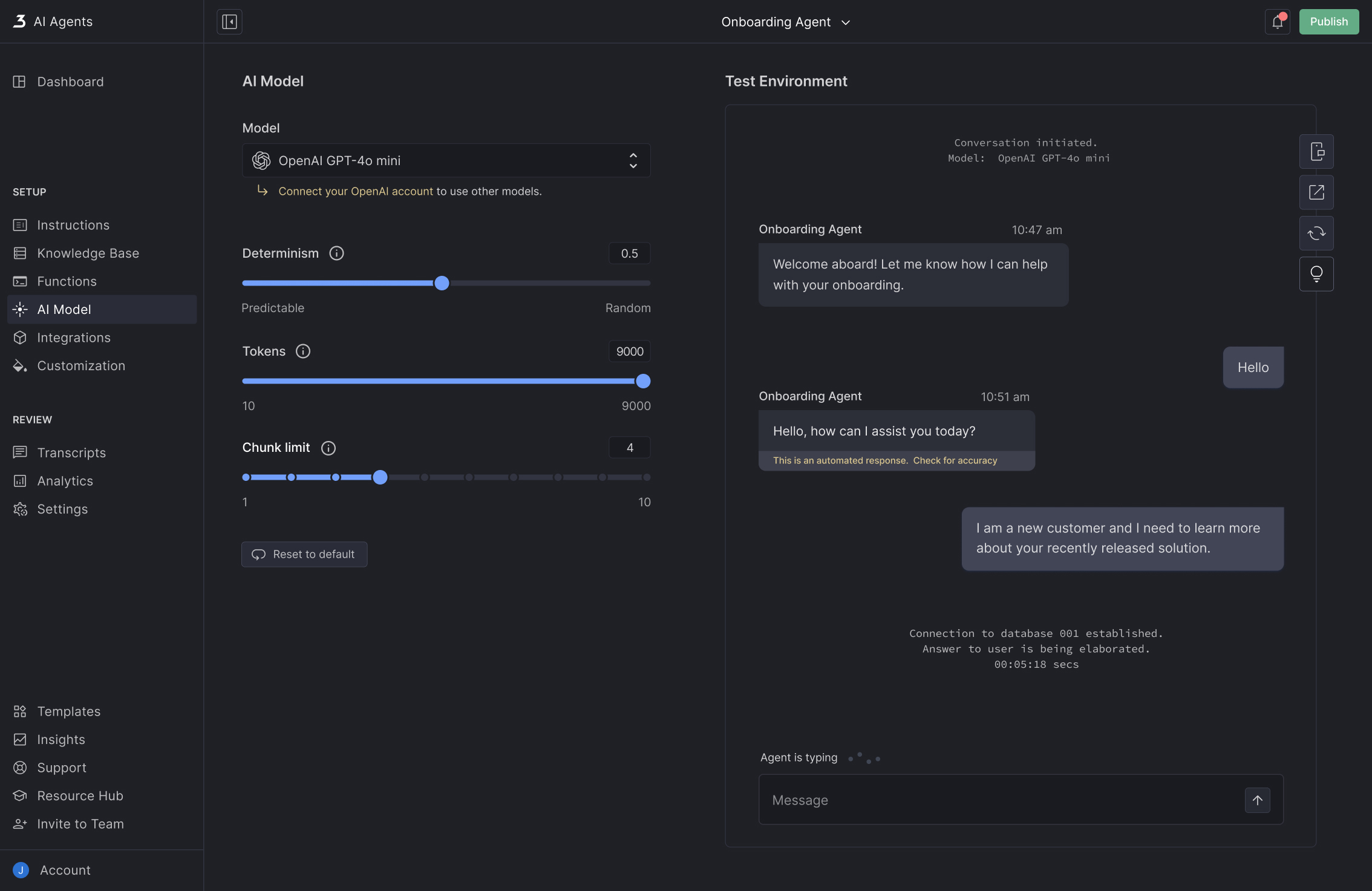
Users can generate workflows through natural language, inspect and edit AI-generated logic visually, and use AI as a collaborative assistant throughout creation, debugging, and execution, without losing sight of what the system is doing.

Rather than positioning AI as an autonomous decision-maker, the platform was designed around a human-in-the-loop model. AI accelerates the work. Users retain full visibility and control over the outcome.

Impact

To be announced…

My Role

I led end-to-end product design for this concept initiative, from opportunity framing through interaction design and high-fidelity prototyping. My responsibilities included:

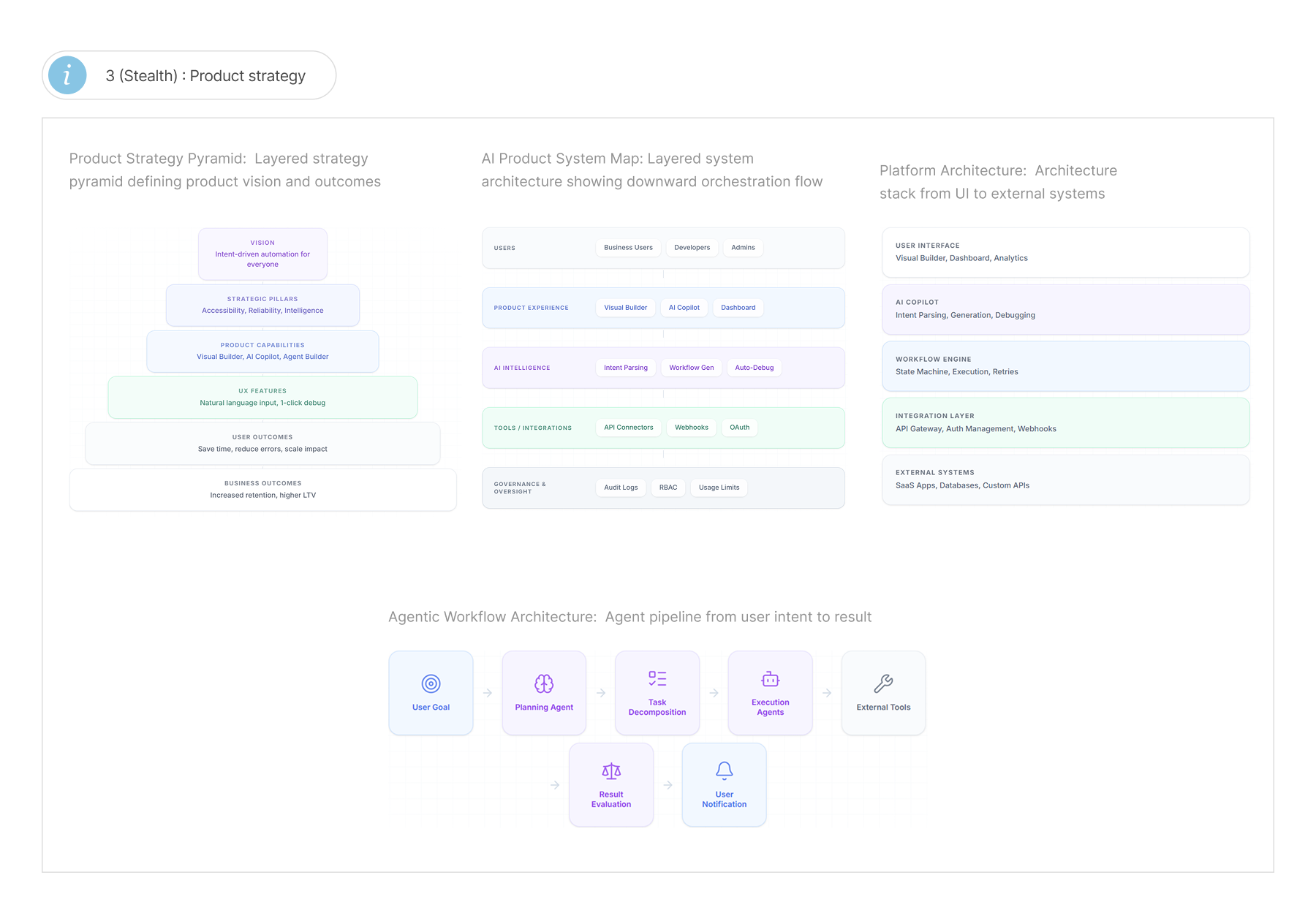
Product strategy
Problem framing
Competitive research
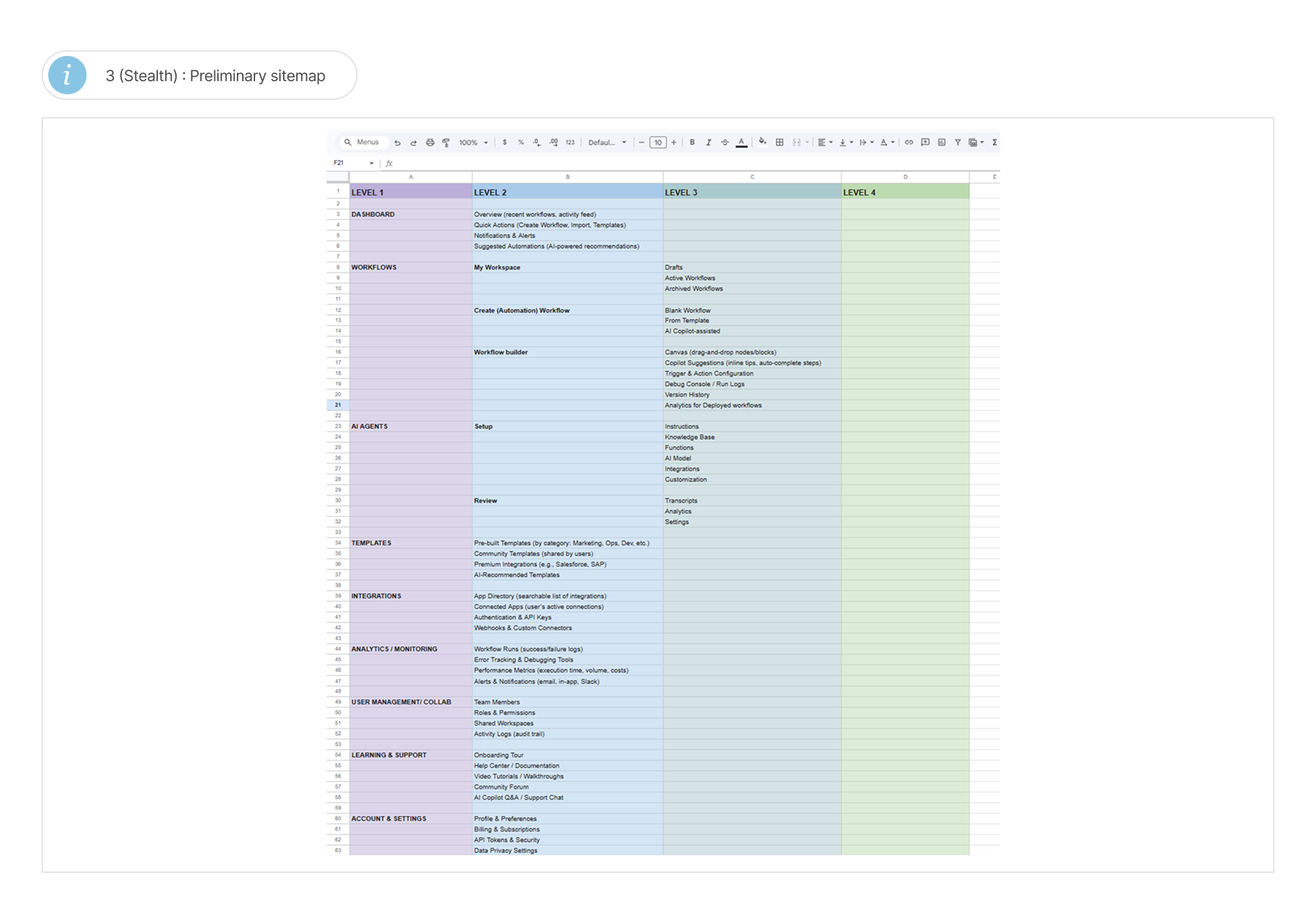
Information architecture
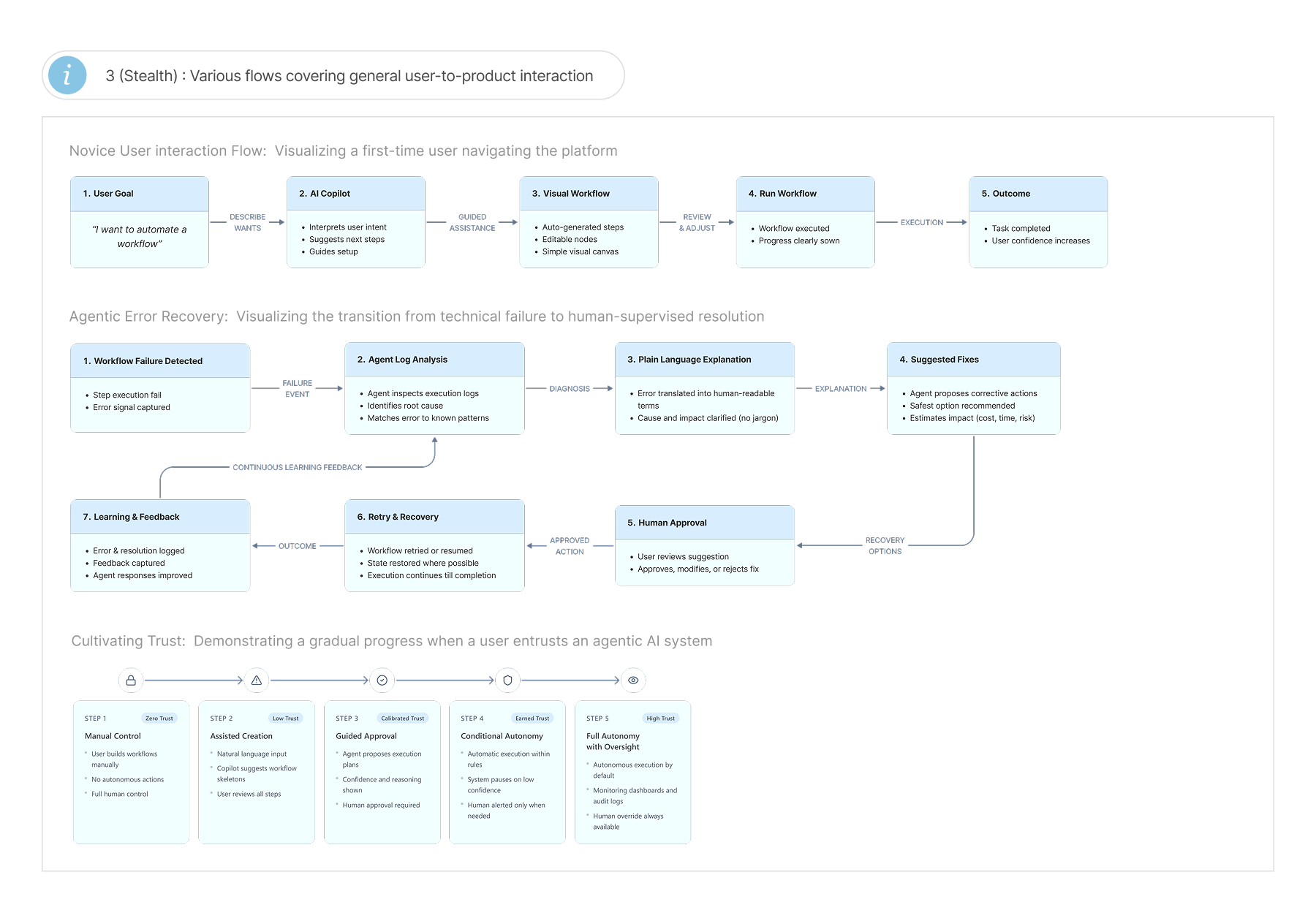
Workflow design
AI Copilot interaction design
Visual interface design
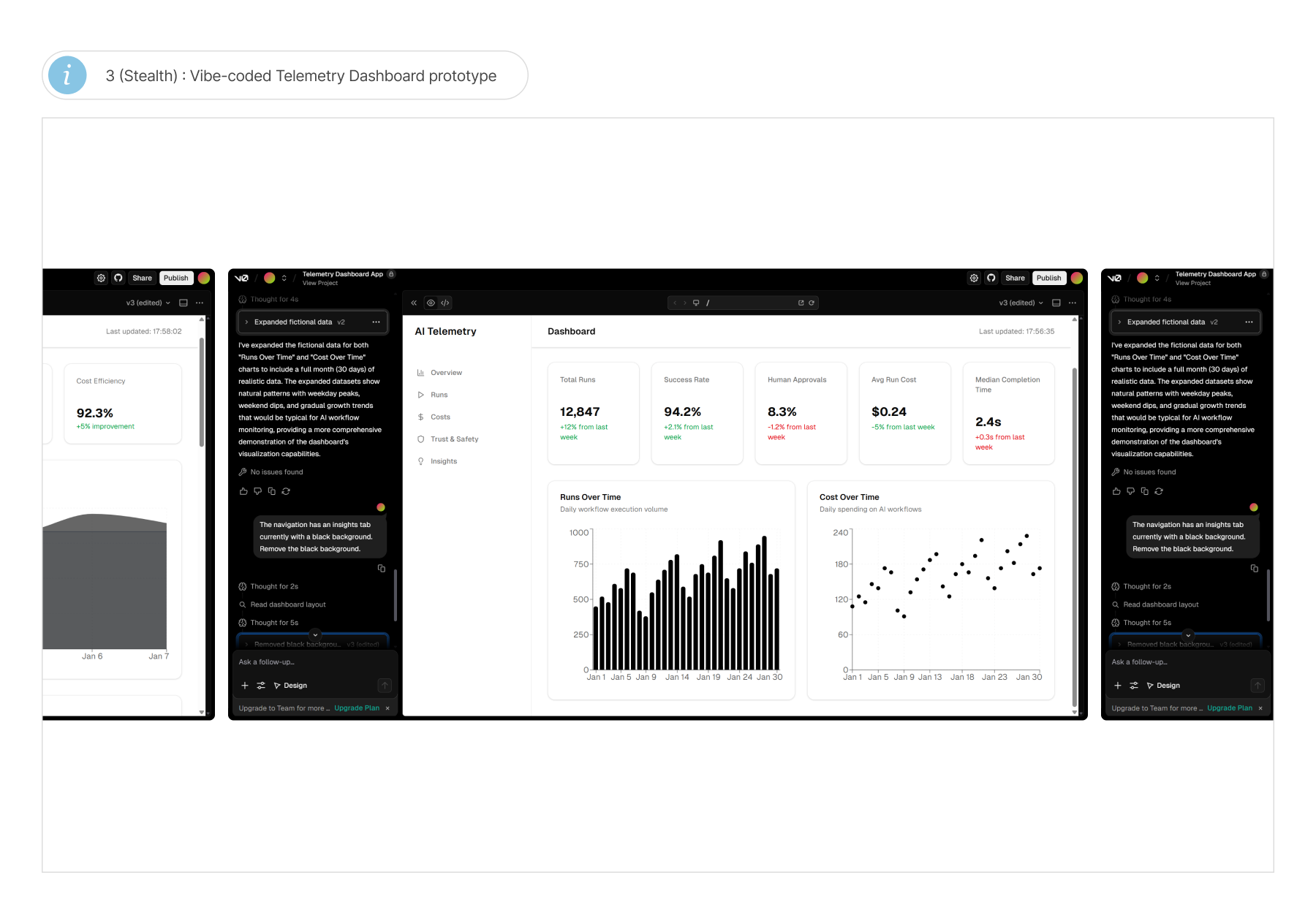
Prototyping (vibe-coding)

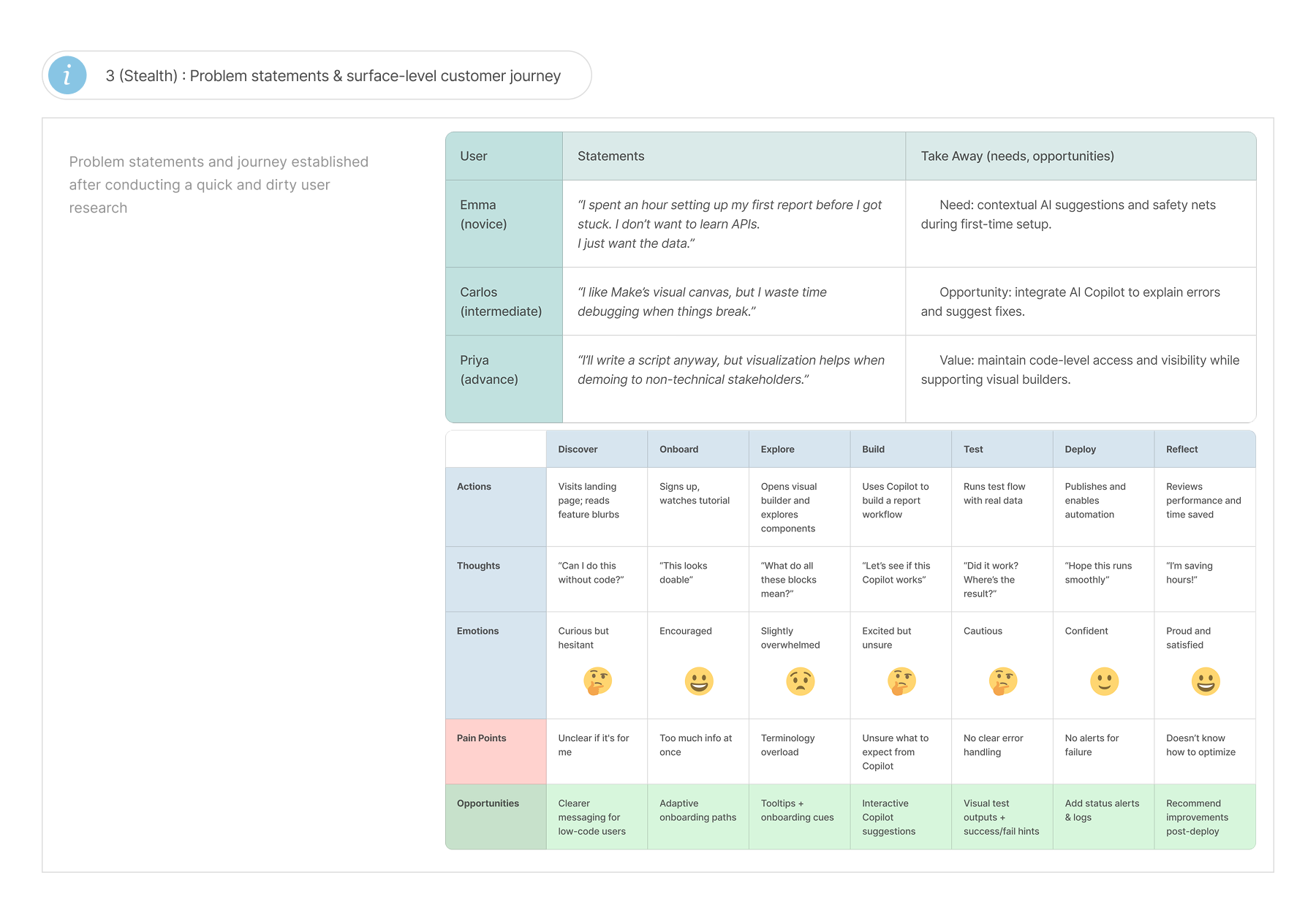
Understanding how users interact with automation tools

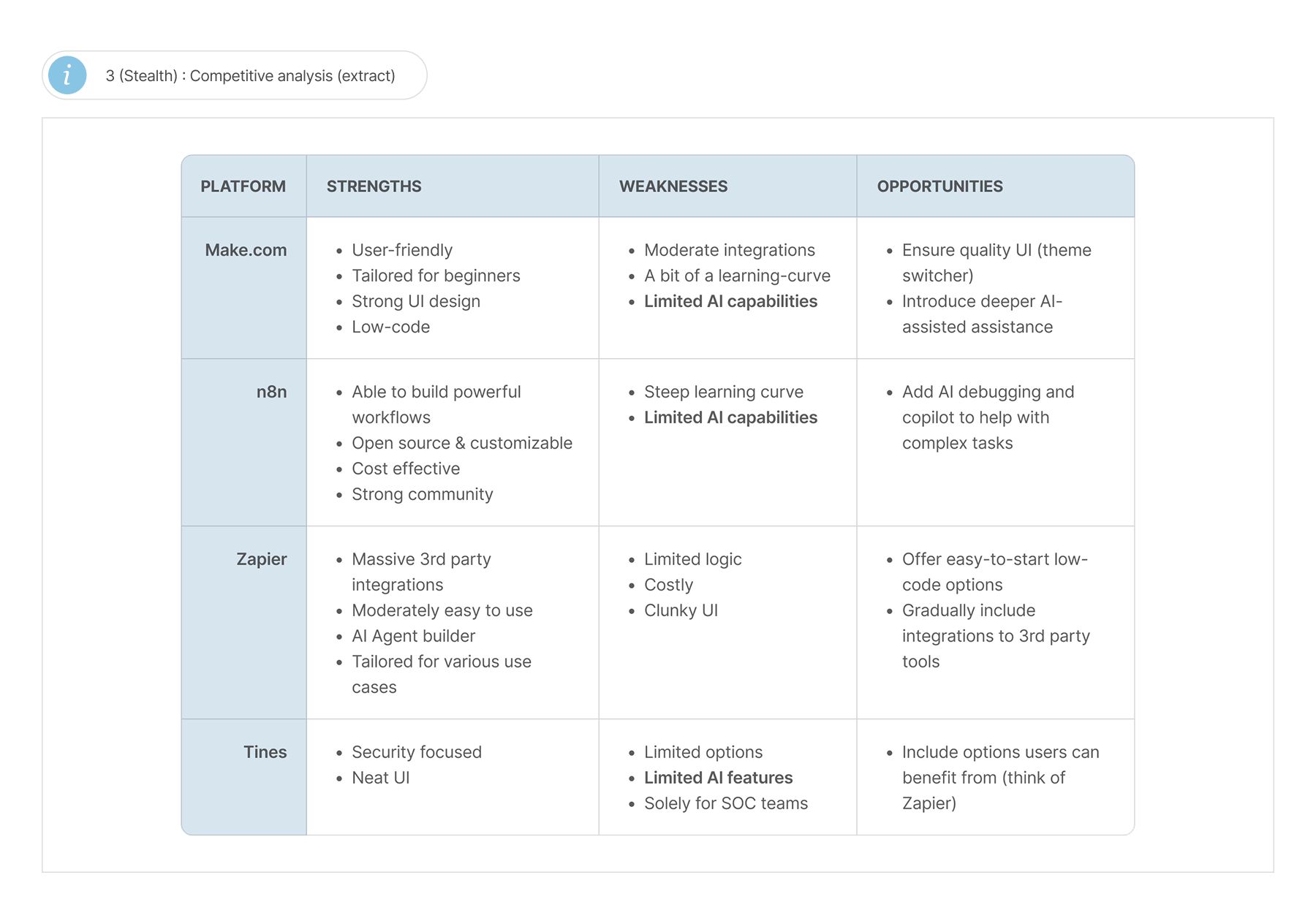
The project began by examining how developers and non-technical users currently interact with automation tools and where those tools fall short.  A competitive analysis I conducted revealed that many existing platforms offer considerable power but require users to translate their ideas into technical logic before they can extract any value.

That translation step from intent to configuration is where users tend to struggle. Subsequently, a parallel investigation also highlighted growing user expectations around generative AI. People increasingly expect to describe goals conversationally rather than manually configuring systems.

The appetite for AI-assisted workflows was real, but so was the concern. A fully autonomous system raised immediate questions around reliability, transparency, and trust.

These findings crystallised a principle that would anchor every design decision that followed: AI should accelerate automation — not remove user control.

Navigation had become increasingly fragmented as newer functionalities were introduced
Core experimentation workflows demanded more effort
Reporting and data interpretation lacked clarity; users needed to act quickly
The visual language no longer reflected modern enterprise software expectations

Defining an AI-native concept

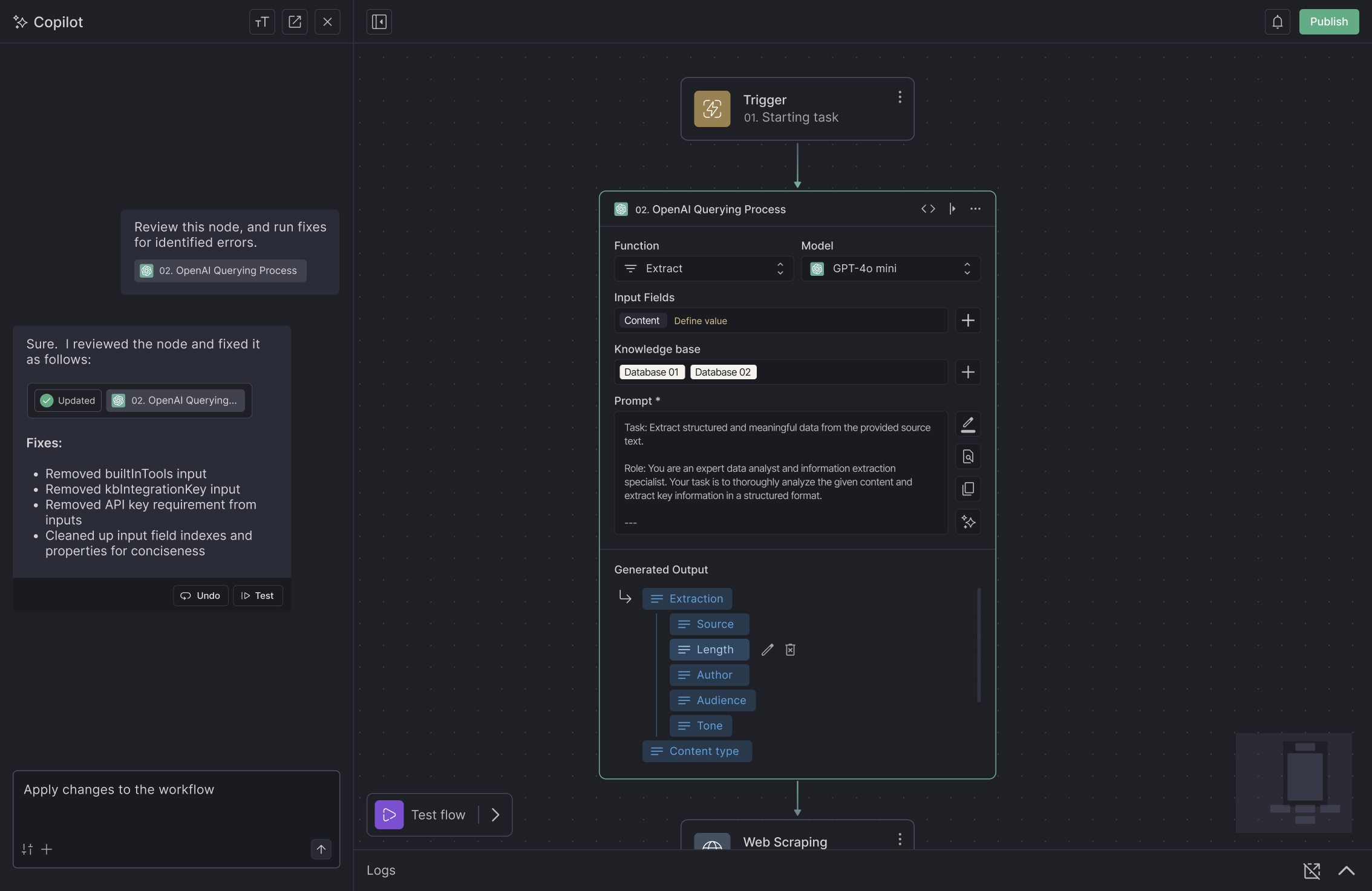
The central design challenge was making AI-generated workflows feel understandable, editable, and reversible, not like a black box users had to trust blindly.

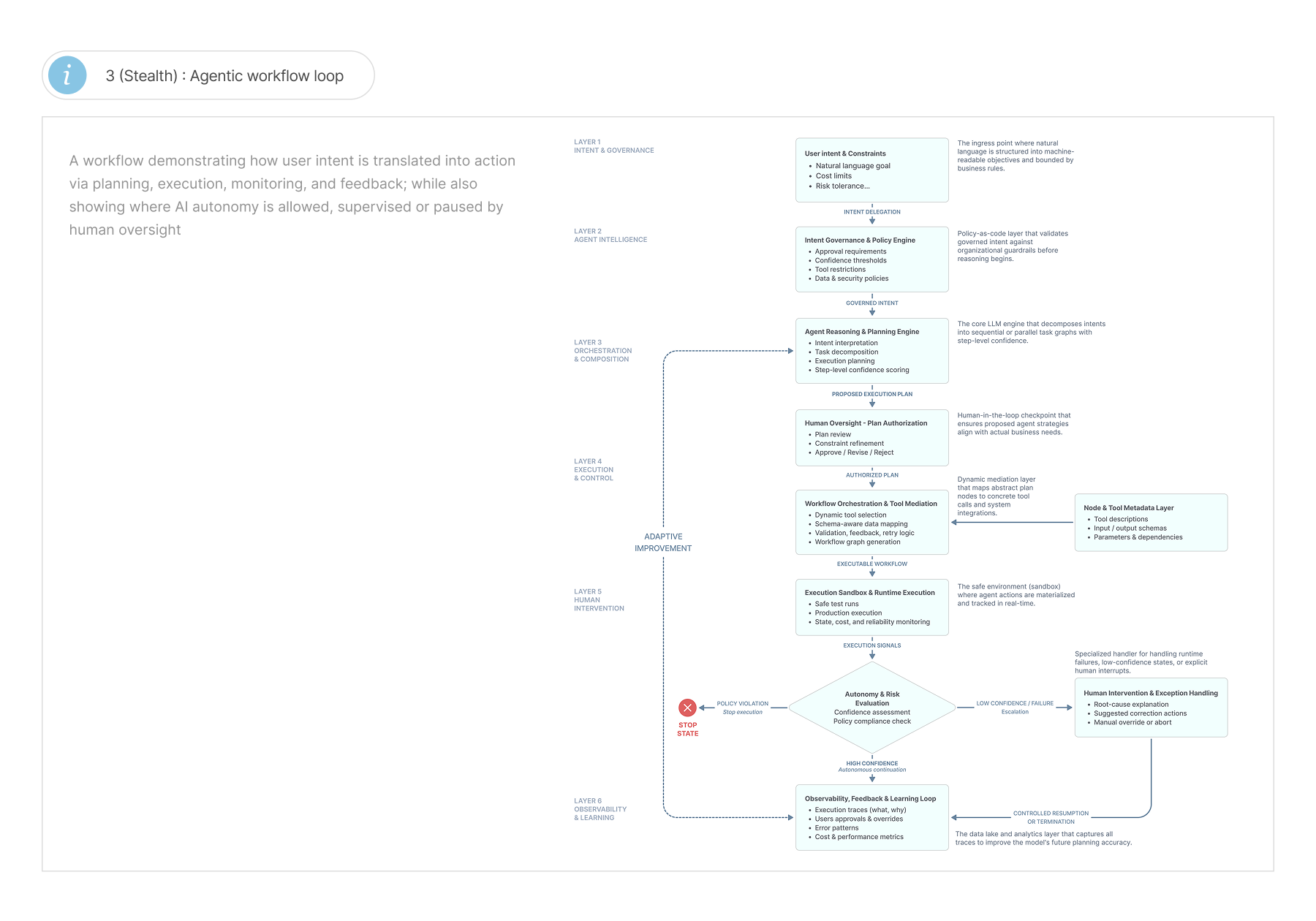
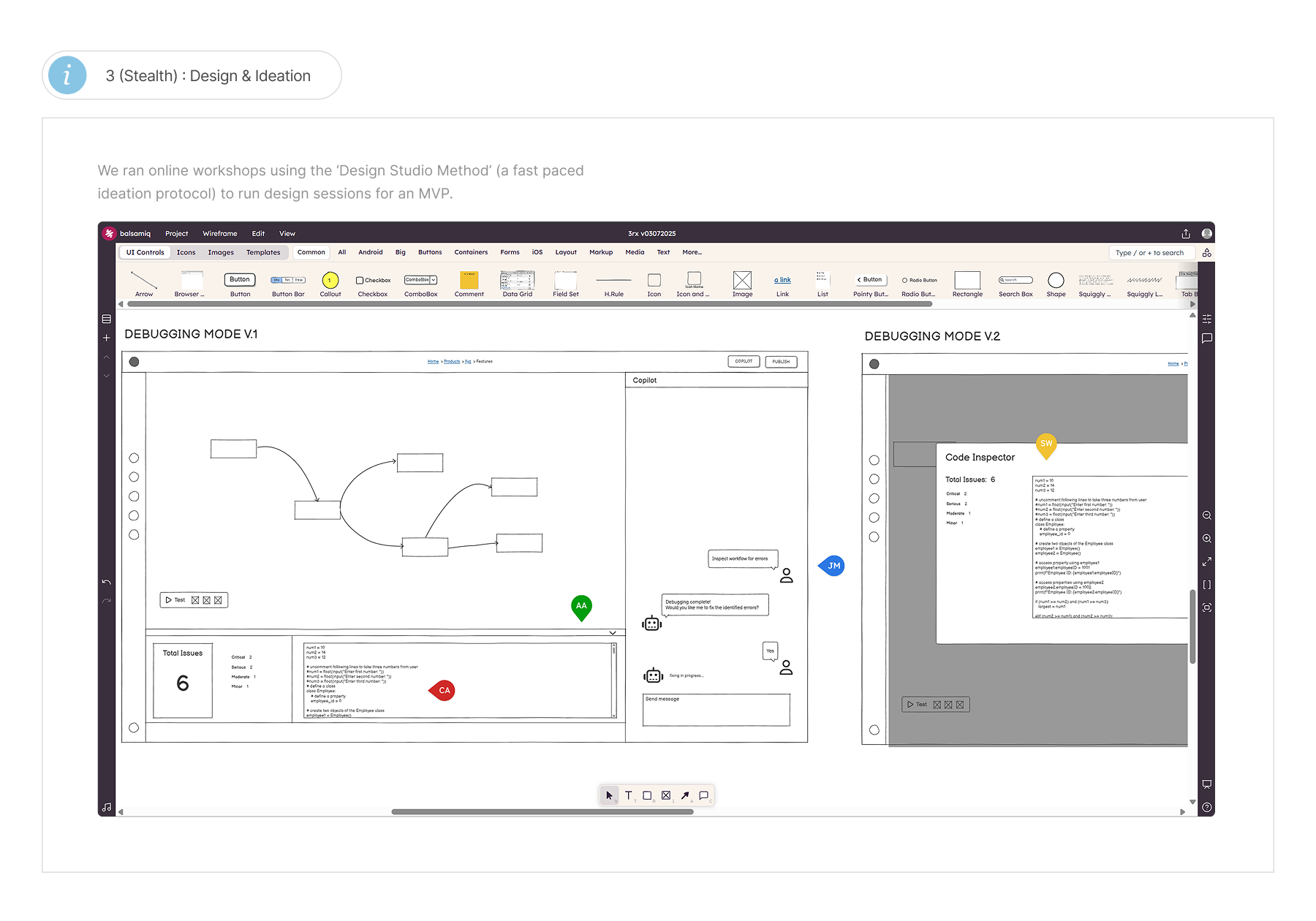
I explored multiple interaction models that combined conversational prompting with visual workflow editing, allowing users to move fluidly between describing what they wanted and seeing it represented as structured, inspectable logic. The goal was to make the AI’s reasoning visible; something users could follow, question, and override at any point.

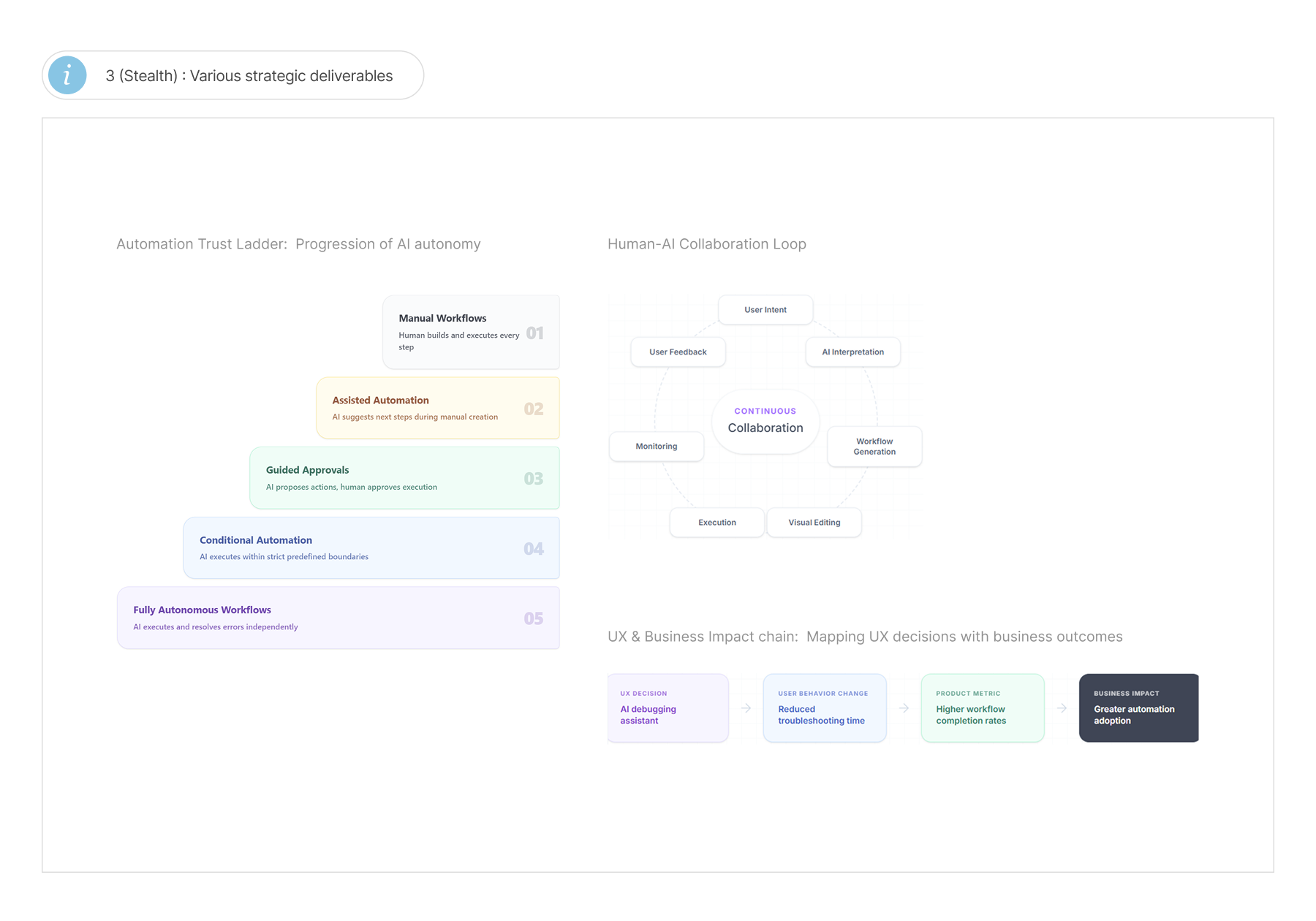
Five principles guided the work throughout:

users describe outcomes rather than assemble technical logic. The system translates intent into structured workflows that remain transparent and editable
every AI-generated decision can be inspected, modified, or reversed. Transparency isn't a feature; it's the foundation of trust
automation accelerates work; it doesn't replace judgment. Users remain in control through clear review and approval mechanisms at every critical step
AI functions as a collaborator, not an autonomous agent. Users can intervene, validate outputs, and make final decisions before any workflow executes
the platform accommodates both novice and experienced users by surfacing advanced capabilities gradually, letting users start conversationally and go deeper as their confidence grows
These principles are the product’s point of view on what trustworthy AI-native software should feel like.

A platform leveraging natural language into executable workflows

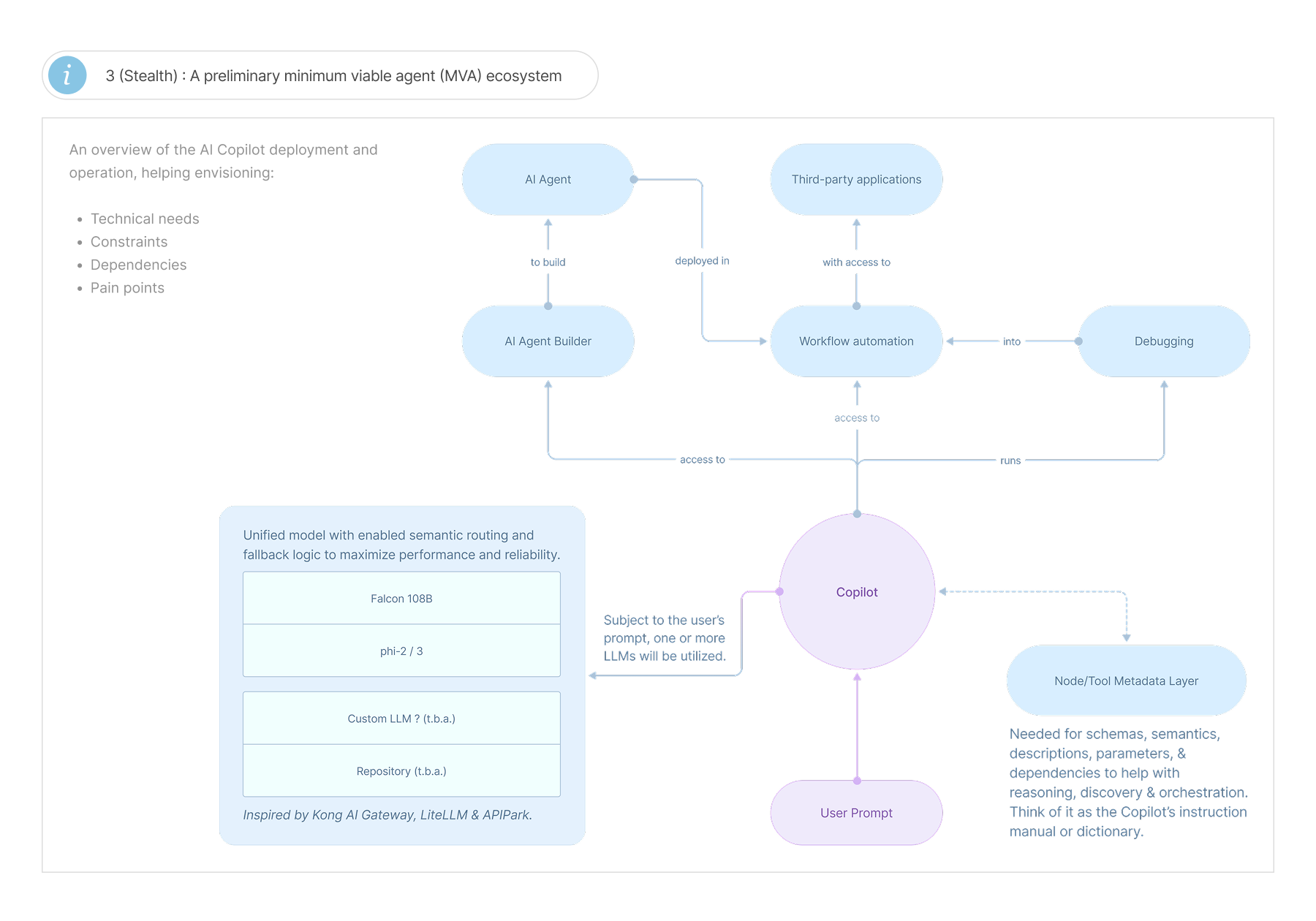
The final concept is an AI-native workflow automation platform where users transform natural language into executable workflows through an ongoing collaboration with an AI Copilot.

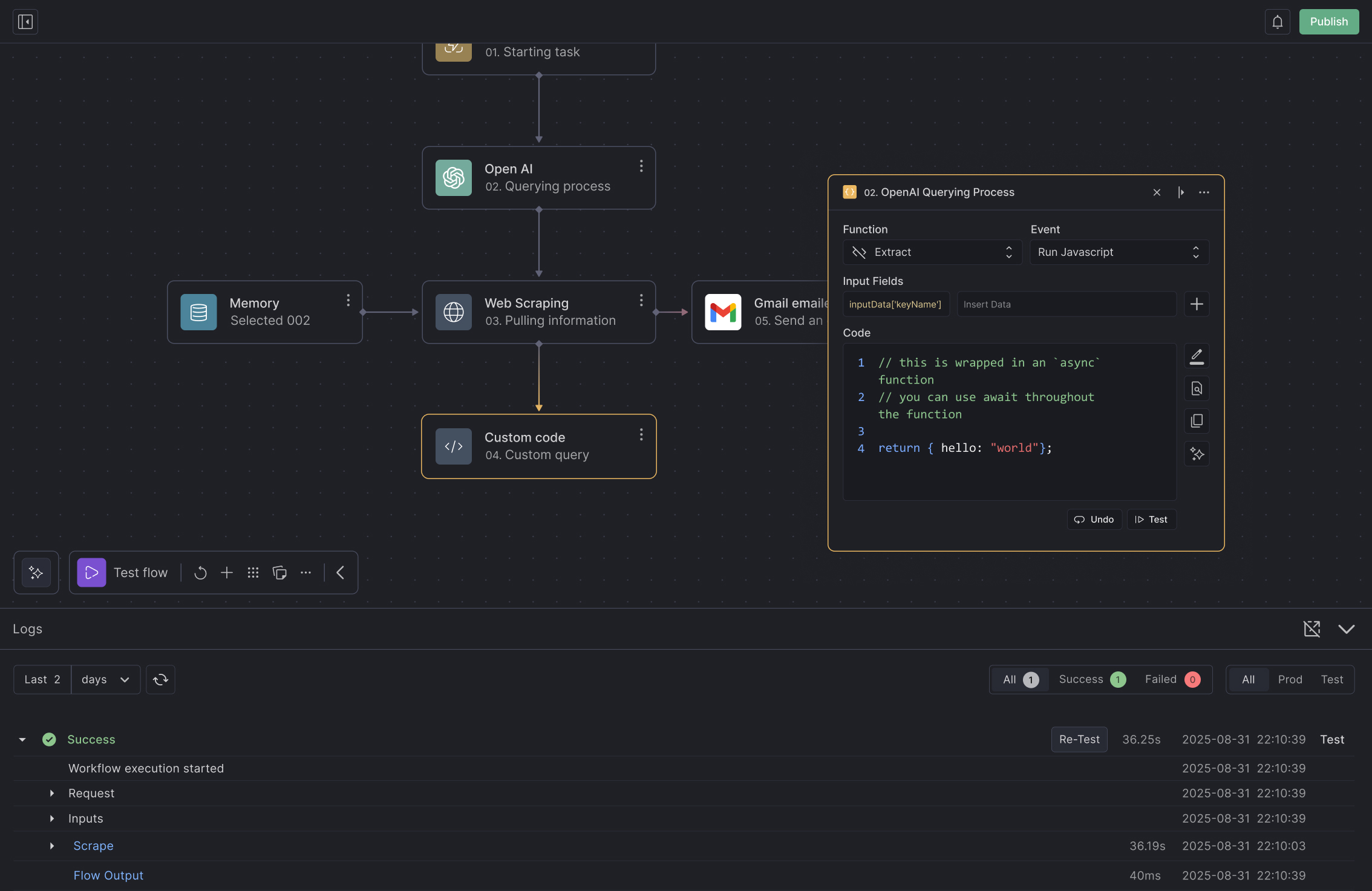
Users can generate workflows, inspect the underlying logic, visually edit execution paths, debug failures with AI assistance, and review generated code before anything runs. At every stage, the system makes its reasoning visible and keeps the user in the decision seat.

Rather than treating AI as a system that acts on your behalf, the platform positions it as an intelligent collaborator that augments human expertise while preserving transparency, control, and accountability.

The result is an interaction model that lowers the barrier to workflow automation without sacrificing the flexibility experienced developers need.

Validation & Iterations

Validation focused on iterative stakeholder reviews and continuous refinement of interaction models across the concept phase.

Feedback centred on three questions: were AI-generated workflows clear enough to trust? Were editing capabilities discoverable without instruction? And did users feel confident reviewing AI outputs before committing to execution?

Each round of feedback sharpened the workflow generation experience, tightened the debugging interactions, and refined the human approval mechanisms, progressively building toward an interaction model that felt collaborative rather than opaque.

Interested in learning more about my work & expertise?

Lets design with purpose and scale your business with impact.

More Work