Leveraging AI to mimic offline retail experiences online to help buyers find the right size for a specific garment
Product Design
UX Research
Business Intelligence
Subject-matter expert
Machine-learning engineers
Developers & QA
Data Scientists
About
Fit Analytics (formerly part of SNAP Inc.) is a B2B retail technology company specialising in AI-powered size and fit recommendations for global apparel retailers. Its flagship product, Fit Finder, helps shoppers find the right size while enabling retailers to reduce returns, increase conversions, and improve buyer confidence. The platform is trusted by Uniqlo, Patagonia, The North Face, ASOS, Marks & Spencer, and other leading retailers.
Challenge
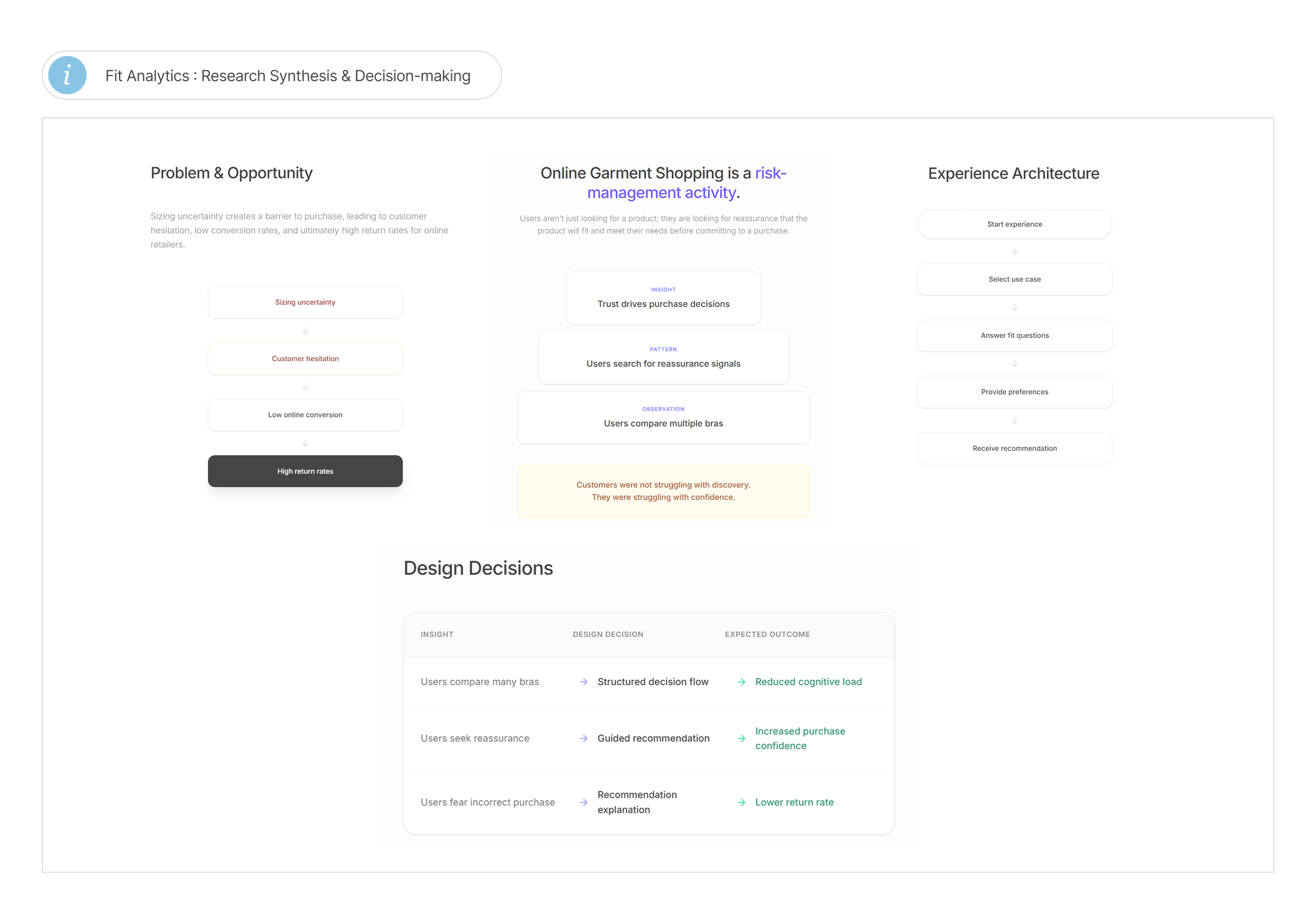
Buying clothes online is inherently uncertain. Sizing varies across brands, materials, and body shapes. Without the ability to try garments on, shoppers are left guessing.
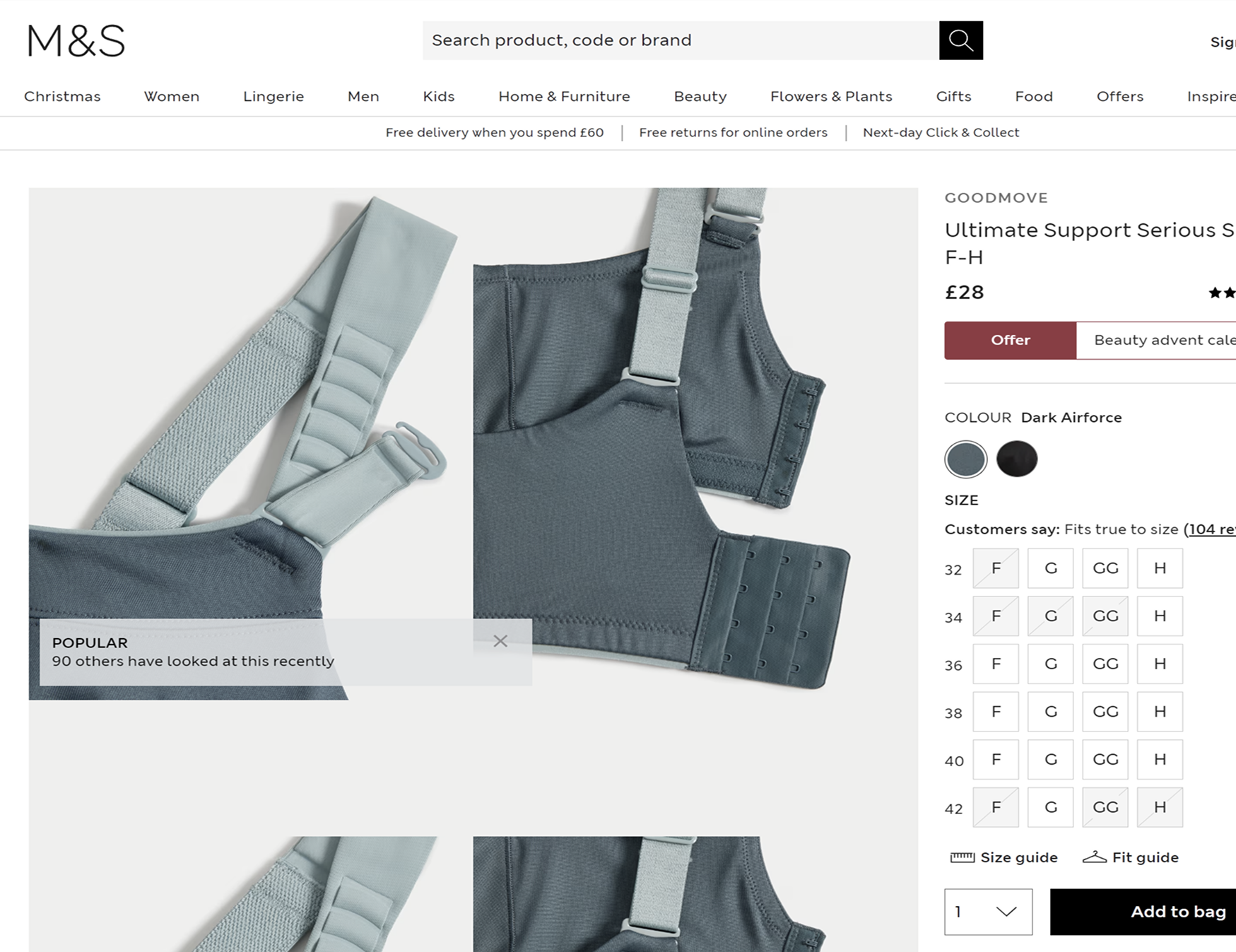
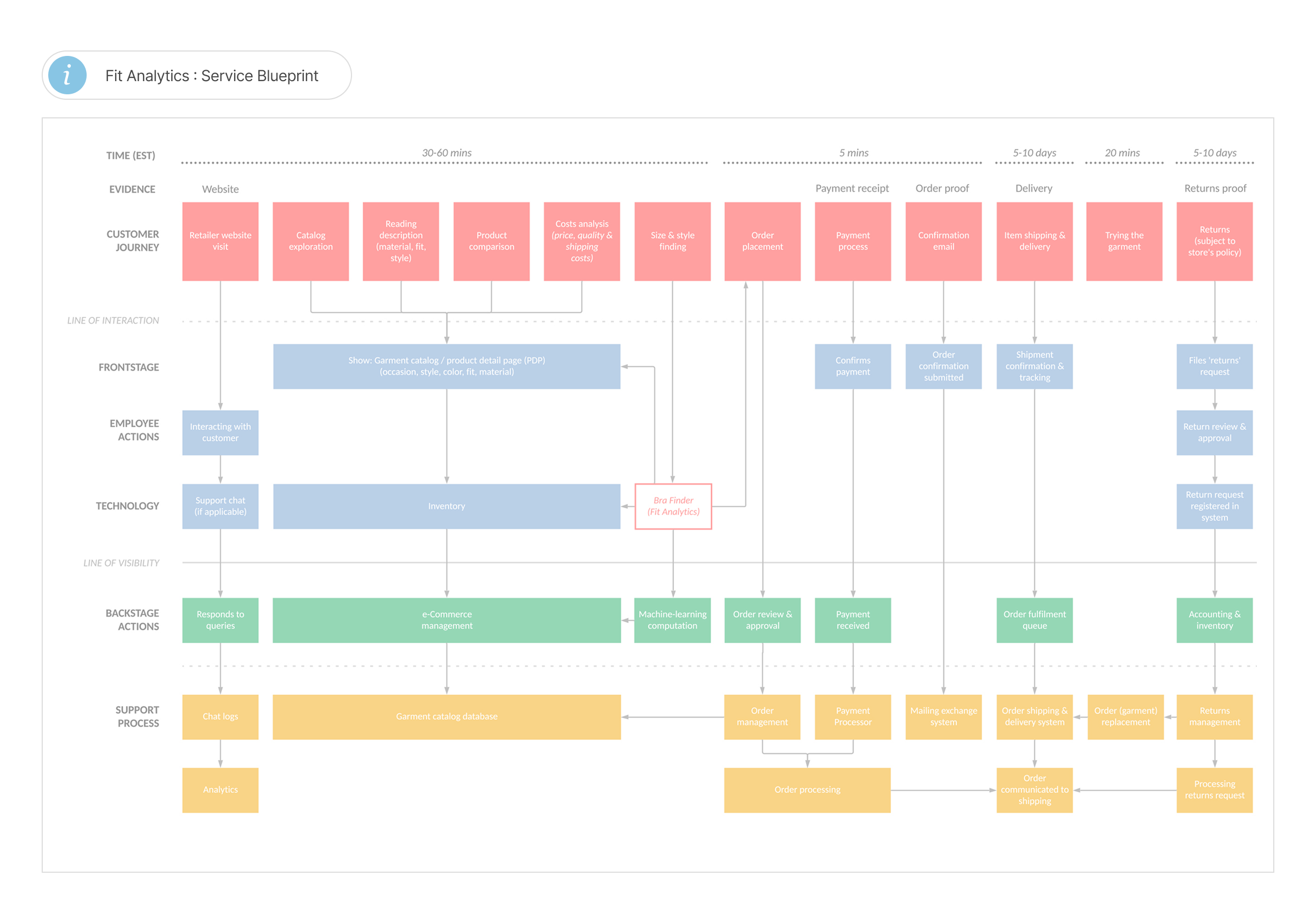
Marks & Spencer, an existing Fit Analytics client, was experiencing declining online sales for a garment category that customers found particularly difficult to buy without trying on first. In-store, experienced fitting consultants guided customers to the right choice. However, such expertise does not exist online. The result:
Solution
I led the design of a 0→1 AI-powered recommendation experience that translated expert fitting knowledge into a guided digital journey.
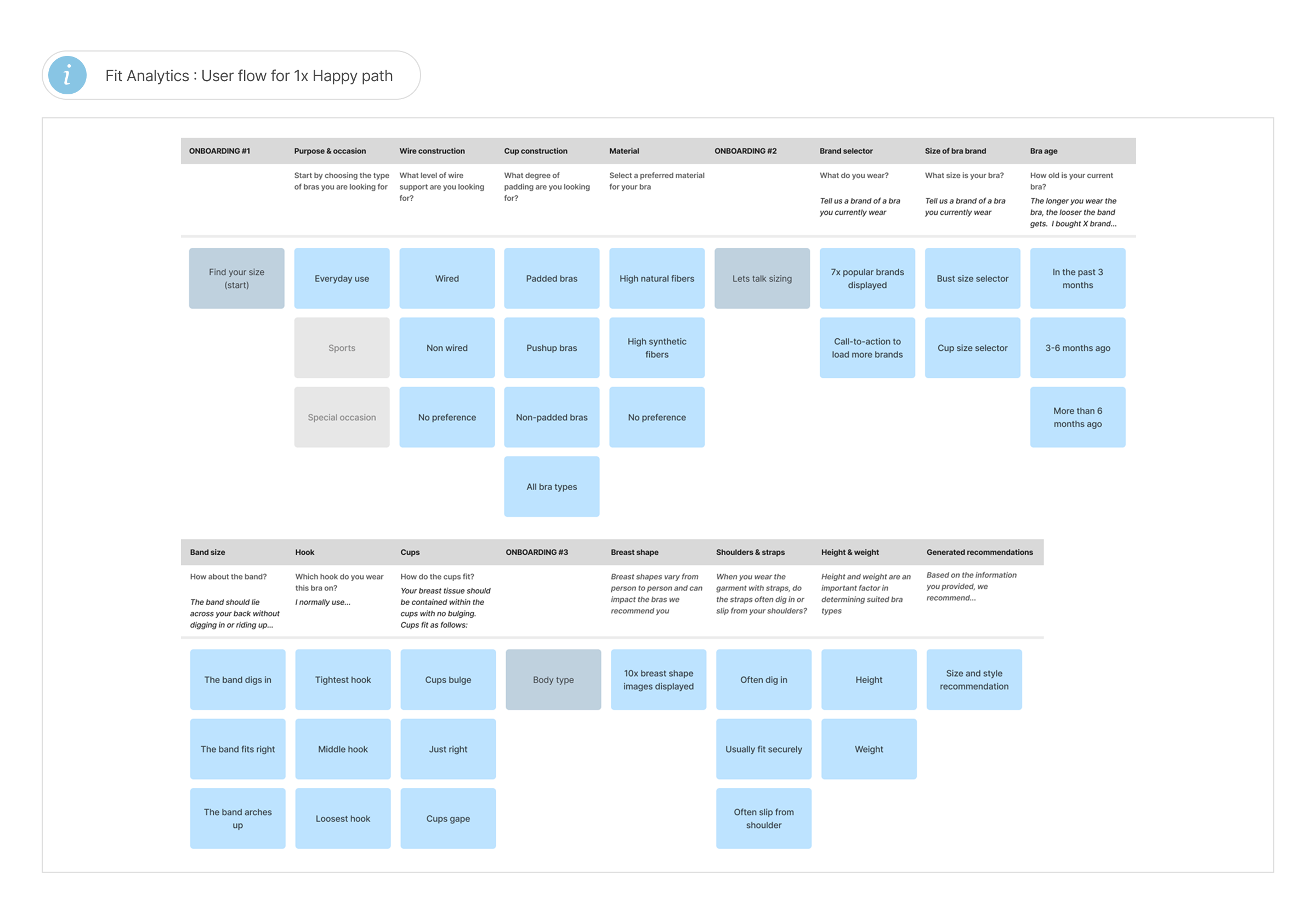
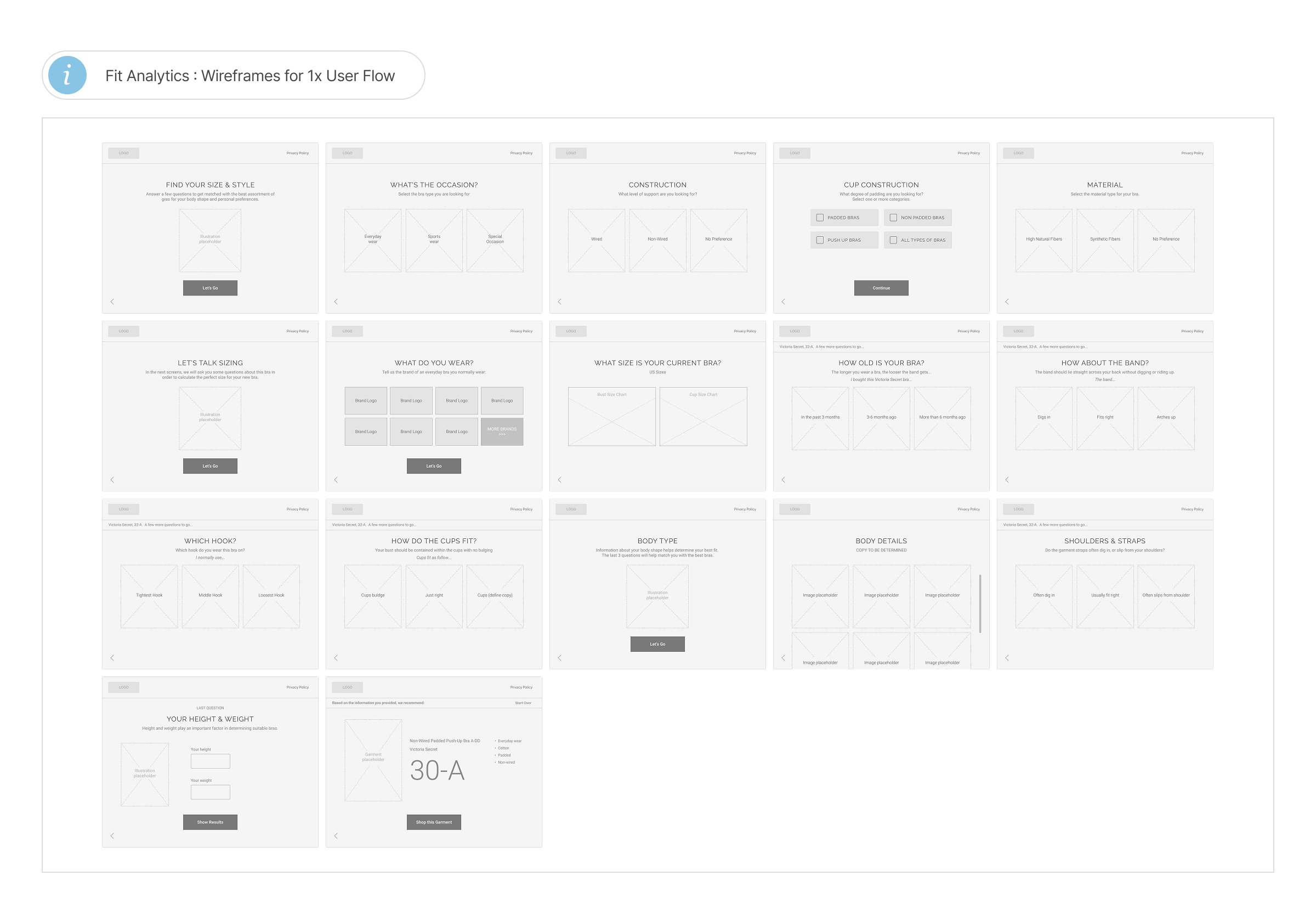
Rather than presenting static sizing information, the experience guides shoppers through a structured flow, collecting relevant information before delivering a personalized size recommendation with a clear explanation of why a specific size was suggested.
The result is a decision-support experience designed to reduce uncertainty, build trust, and help customers purchase with confidence.
Impact
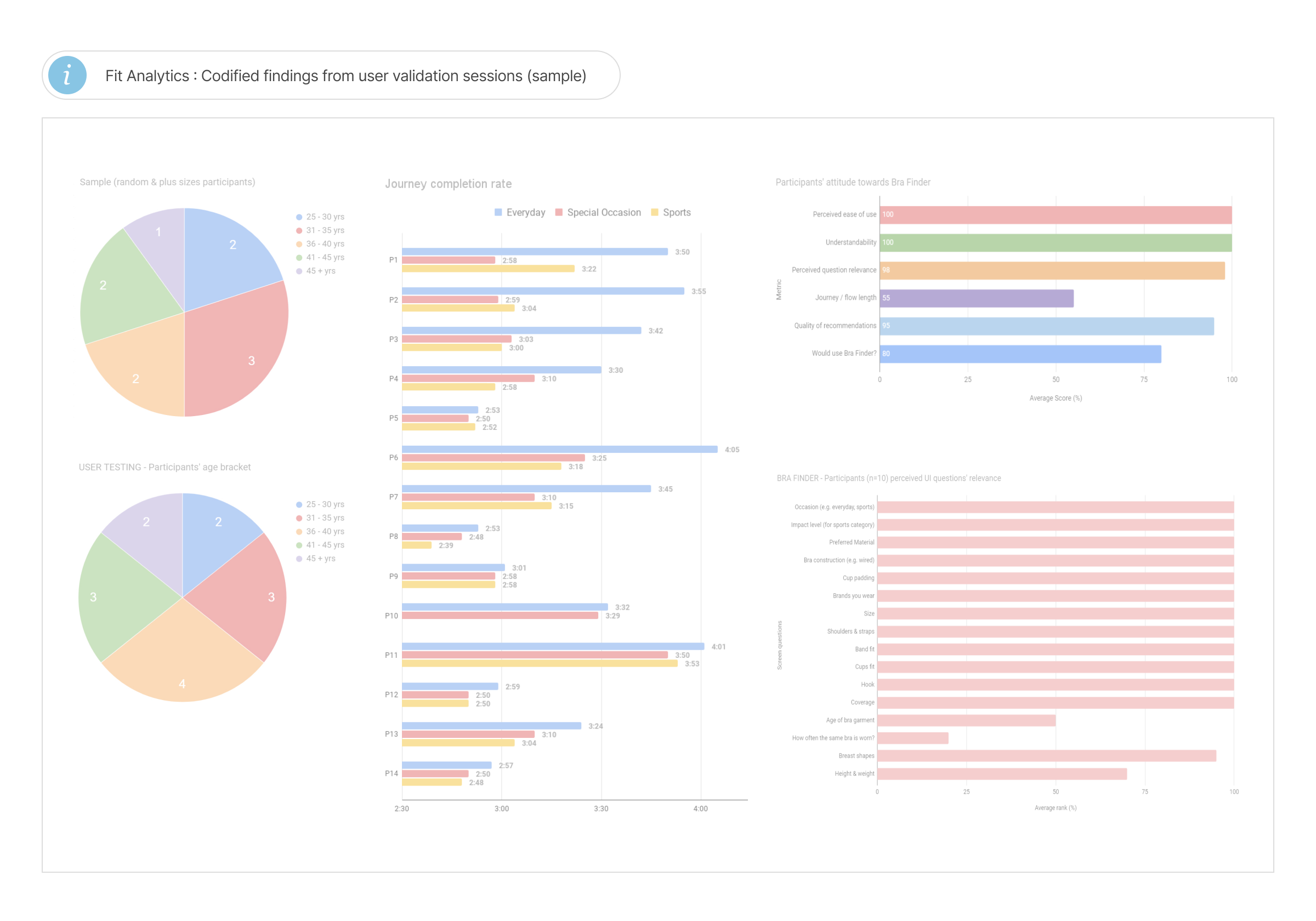
Described by users as ‘experts’ (the value of partnering with a subject-matter expert)
My Role
I owned the end-to-end user experience for this 0→1 initiative, collaborating closely with Product Management, Data Scientists, Machine Learning Engineers, client stakeholders, and a subject-matter expert – a garment fit consultant I hired and brought onto the project. My responsibilities included:
Deciphering a novel challenge through discovery
Because this task was about designing a new product from 0→1, research was a pivotal step on which every design decision was built.
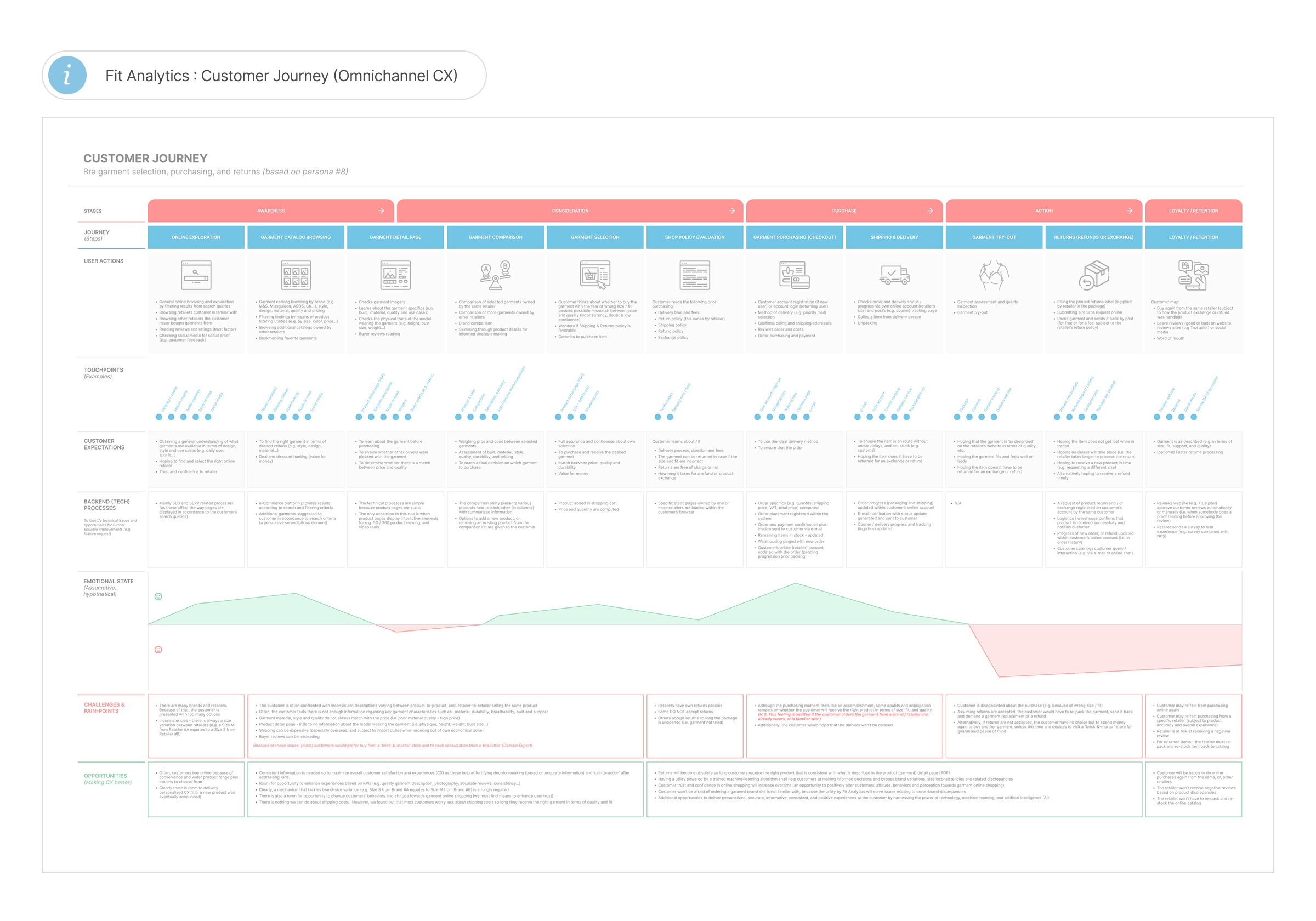
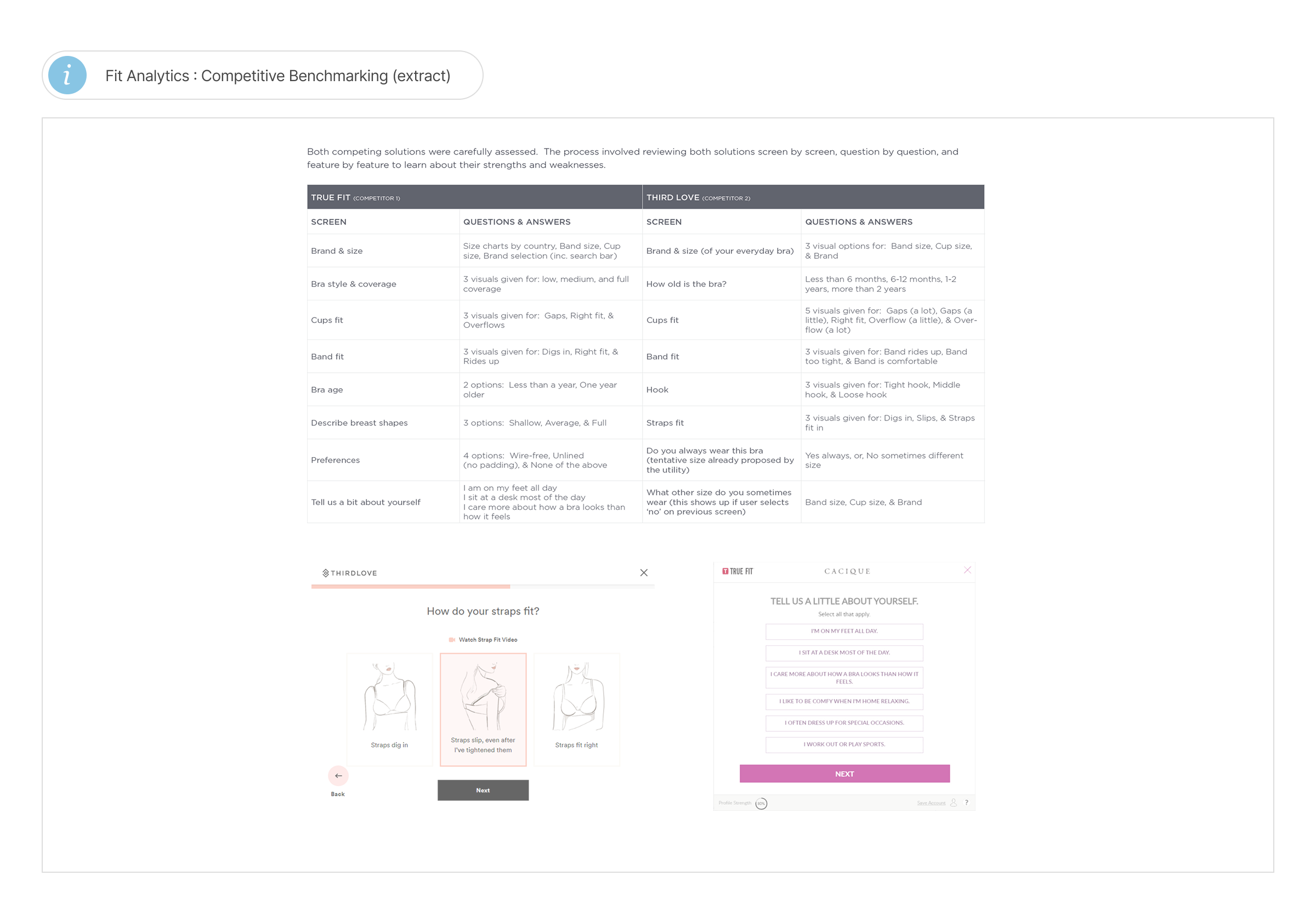
Everything started with a thorough market and competitive research, which helped in discovering the only 2 competitors present back then. This investigation helped me understand how competitors managed to solve challenges my team and I are faced with.
Moving forward, I investigated how shoppers evaluate garment fit online, what drives purchase confidence, and where competing tools fall short. To go deeper, I hired a subject-matter expert (a garment fit consultant) to articulate how shop staff guide customers through fitting decisions and help us translate that expertise into a digital experience.
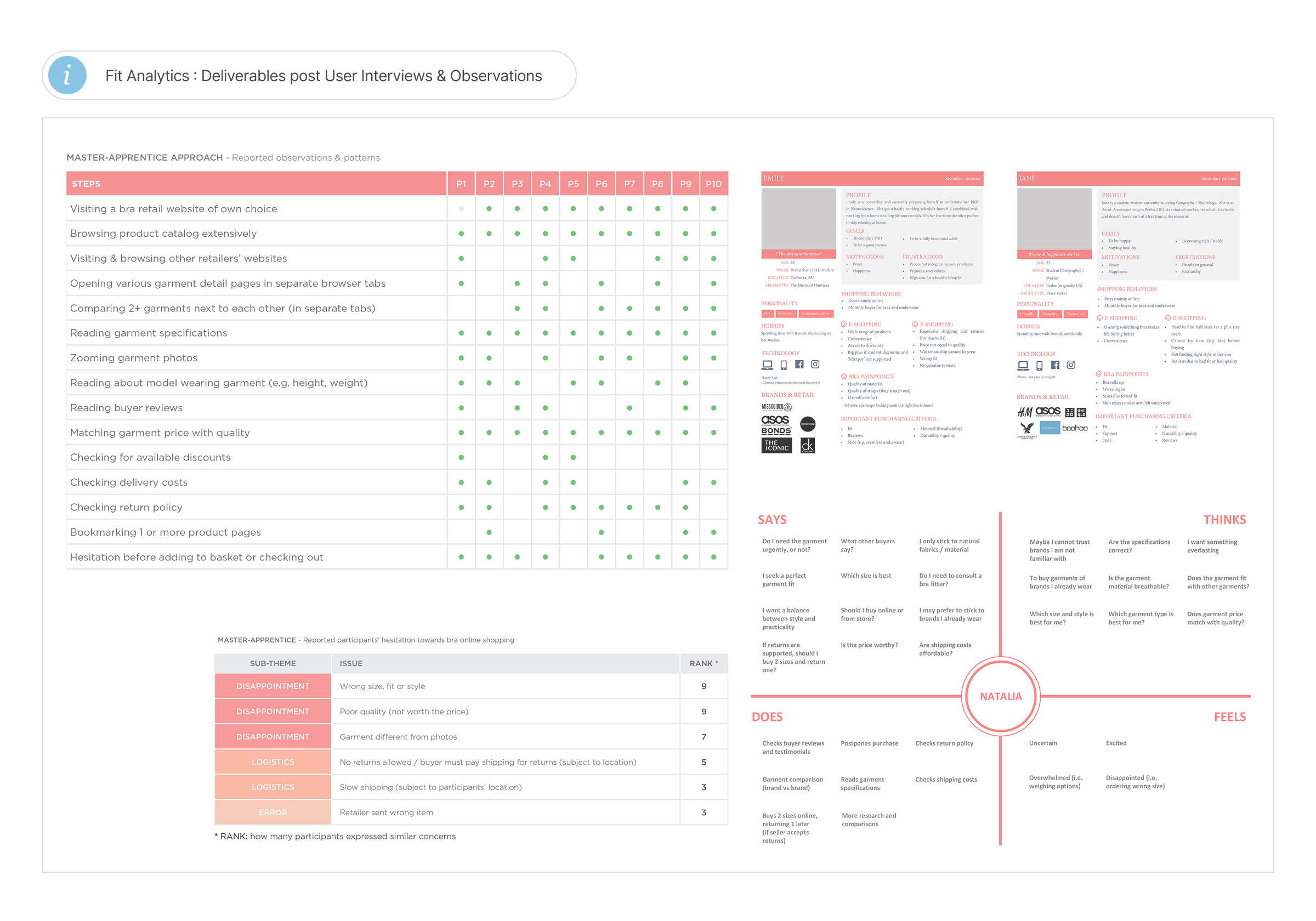
Using interviews and observational research following a master–apprentice protocol, a clear pattern emerged: shoppers didn’t lack information. They lacked confidence in what to do with it.
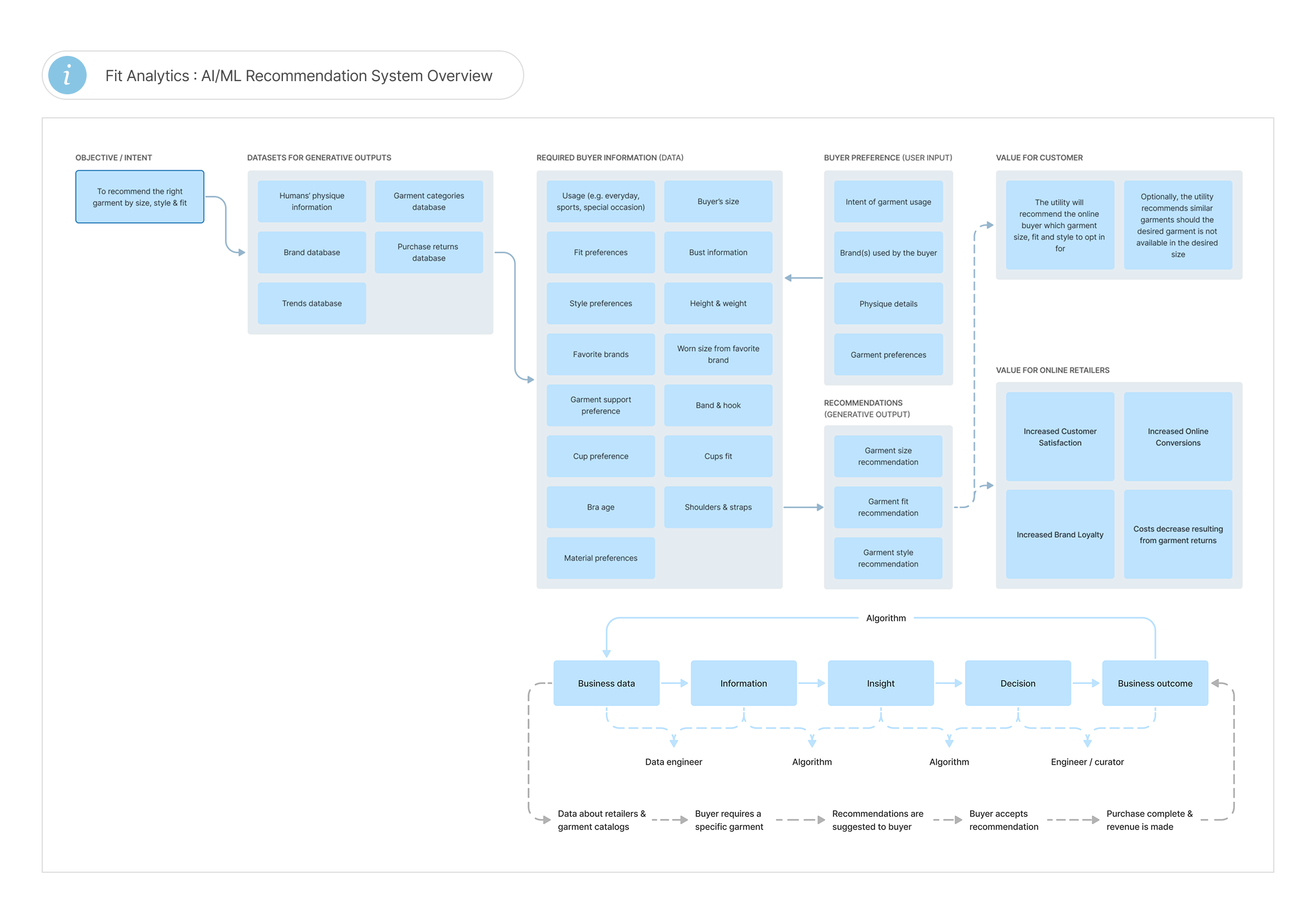
A significant thread of discovery ran in parallel with the technical team. Working alongside Data Scientists and Machine Learning Engineers, I helped define the datasets, recommendation logic, and user inputs needed to generate reliable fit suggestions, ensuring the design and the model were built around the same understanding of the problem.
This shifted the design objective from building a sizing tool to creating a digital decision-support experience.
Conceptualizing a solution from 0 to 1
The central challenge was satisfying two competing needs simultaneously. The AI model required sufficient user input to produce accurate recommendations. Users expected the experience to be fast and frictionless. Too few questions and the model underperforms. Too many questions, and users drop off.
I explored multiple concepts before landing on a guided format — a model that progressively gathered relevant information while mirroring the natural flow of an in-store fitting consultation. I also trained a colleague to run user interviews independently, expanding our research capacity without losing quality.
Throughout, I worked closely with the fitting consultant, engineering, and client stakeholders to refine the question flow, content, and recommendation logic until the experience balanced accuracy, usability, and trust.
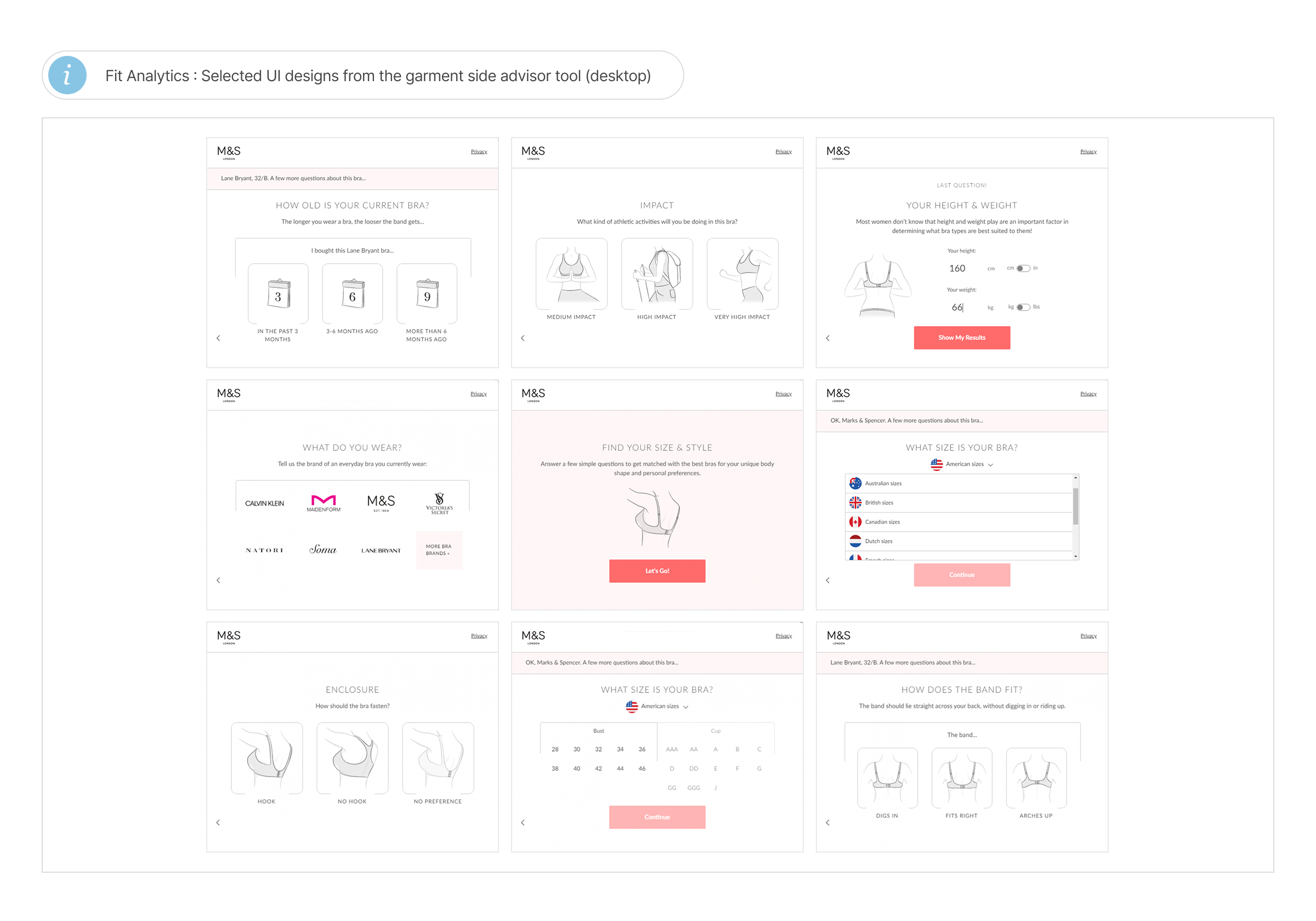
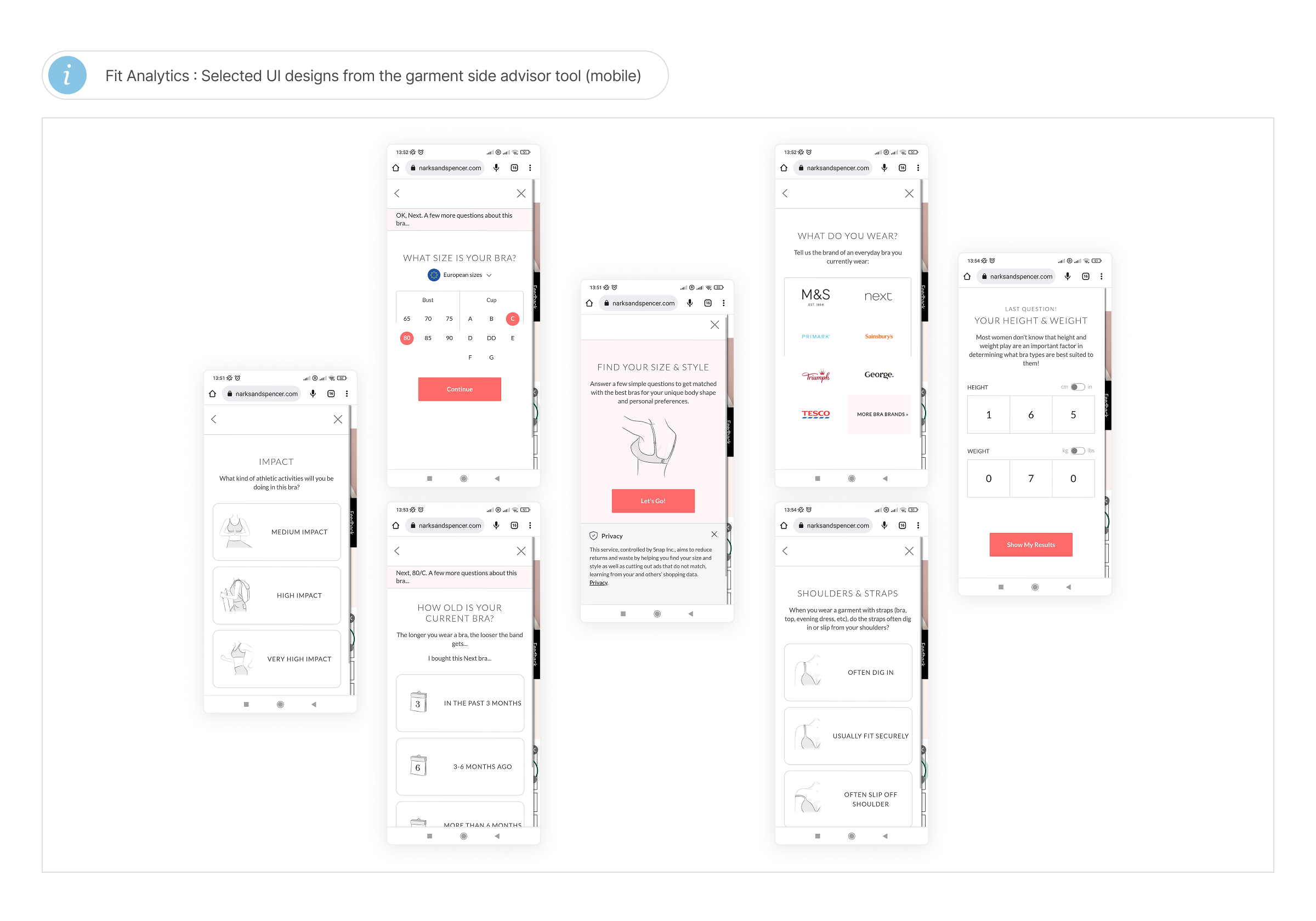
A design that mimics offline experiences digitally
Reviews, validation & improvements
Concepts were reviewed iteratively with stakeholders, the fitting consultant, and client representatives to build confidence and alignment before moving into usability testing.
Moderated sessions with shoppers focused on how participants moved through the flow, whether they trusted the recommendations, and whether they felt confident enough to complete a purchase. Findings drove refinements to question wording, interaction flow, and how recommendations were explained. Each iteration tightening the experience and strengthening user confidence.
Showcase
The video below demonstrates the digital product live on the Mark & Spencer e-Commerce portal.