Native Instruments

Levelling productivity by redesigning a software around how users actually work

Native Instruments
Product Design
UX Research
PO & Scrum Master
Customer Insights
Developers & QA
Designers
8 months

About

Native Instruments is a global leader in music and sound design hardware plus software technologies used by entities like Deadmau5, P!nk, Alicia Keys, Hans Zimmer, and many others. 

Challenge

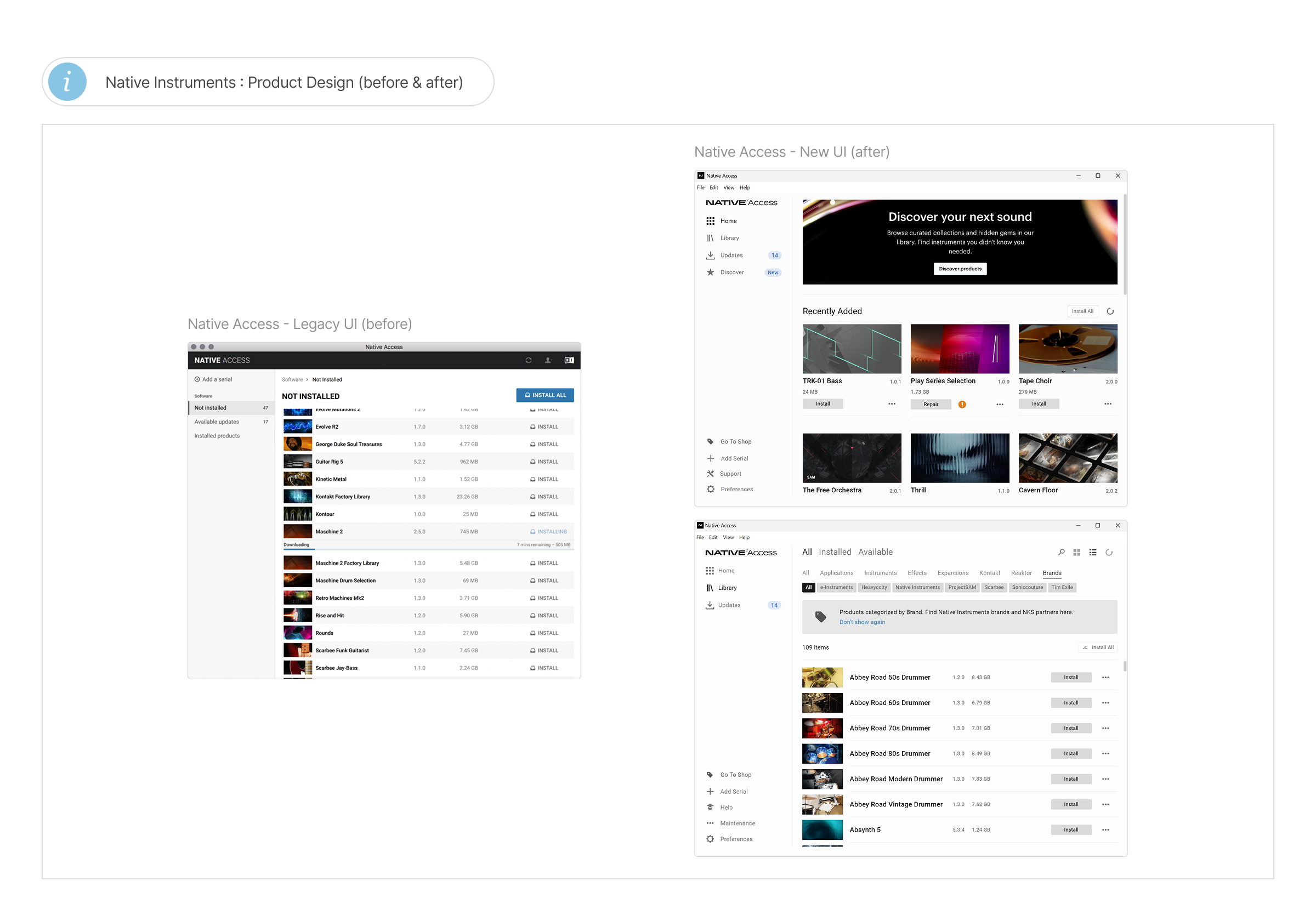
The physical and digital product ecosystem operates via Native Access, a desktop application used by more than 1.5 million customers to install, activate, update, and manage Native Instruments products. Originally designed as a simple installer, Native Access gradually evolved into a comprehensive product management application without evolving its user experience.

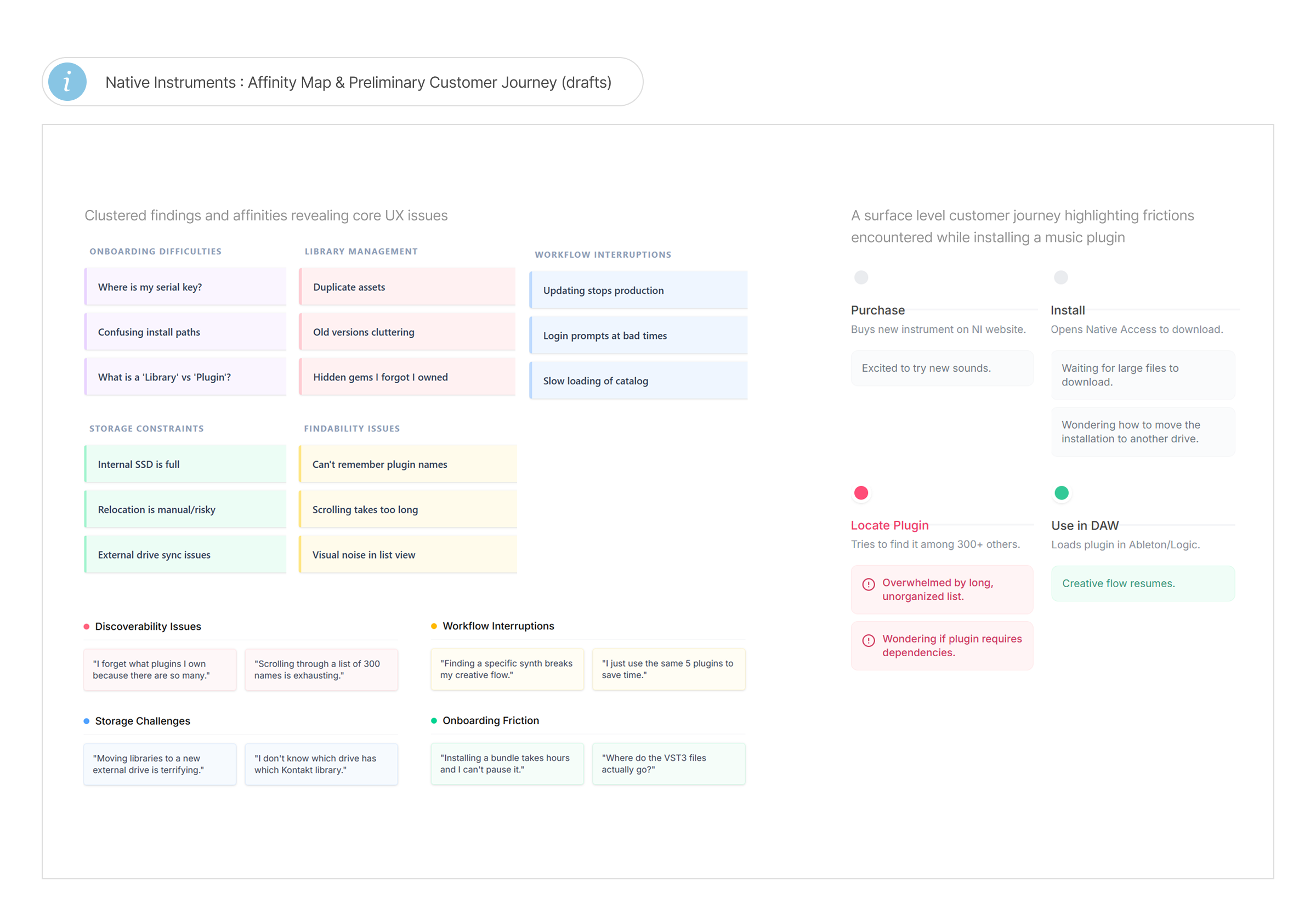
As customers expanded their audio plugin libraries, the application became difficult to navigate. Managing hundreds of plugins, virtual instruments, and sound libraries introduced friction throughout the experience, while growing technical complexity increased support costs and maintenance overhead.

Users frequently struggled with:

Finding products within large, growing libraries
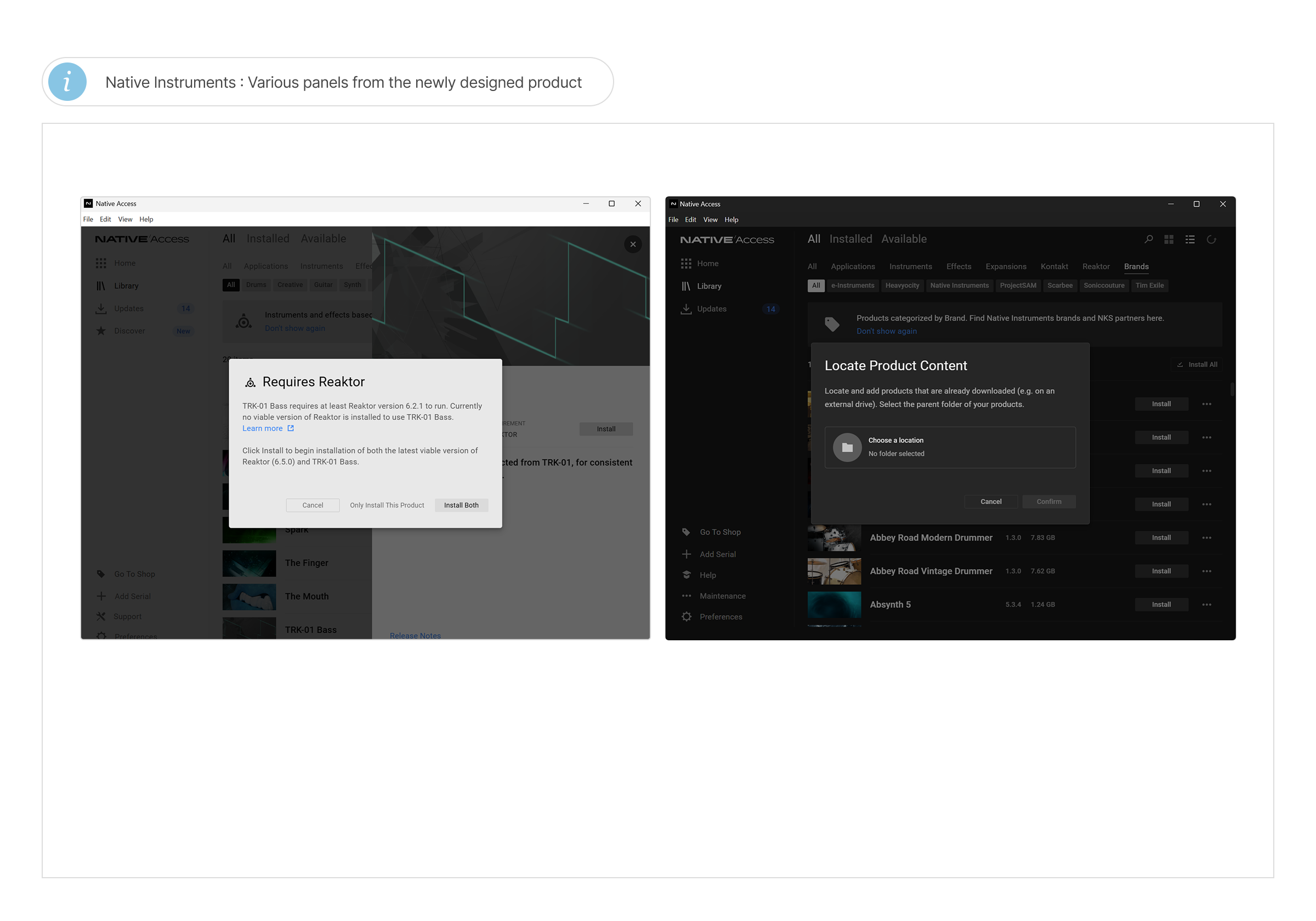
Understanding installation dependencies between plugins
Managing disk storage across local and external drives
Tracking installation progress and system status
The complexity didn’t just frustrate users. It drove up support costs and maintenance overhead across the business.

Solution

I led the redesign of Native Access into a modern product management experience, one enabling musicians and producers to efficiently organise, install, and maintain large collections of creative software.  Rather than a disruptive overhaul, the approach focused on simplifying complex workflows while preserving the familiar interaction patterns that 1.5 million existing customers already relied on.

The redesigned platform introduced:

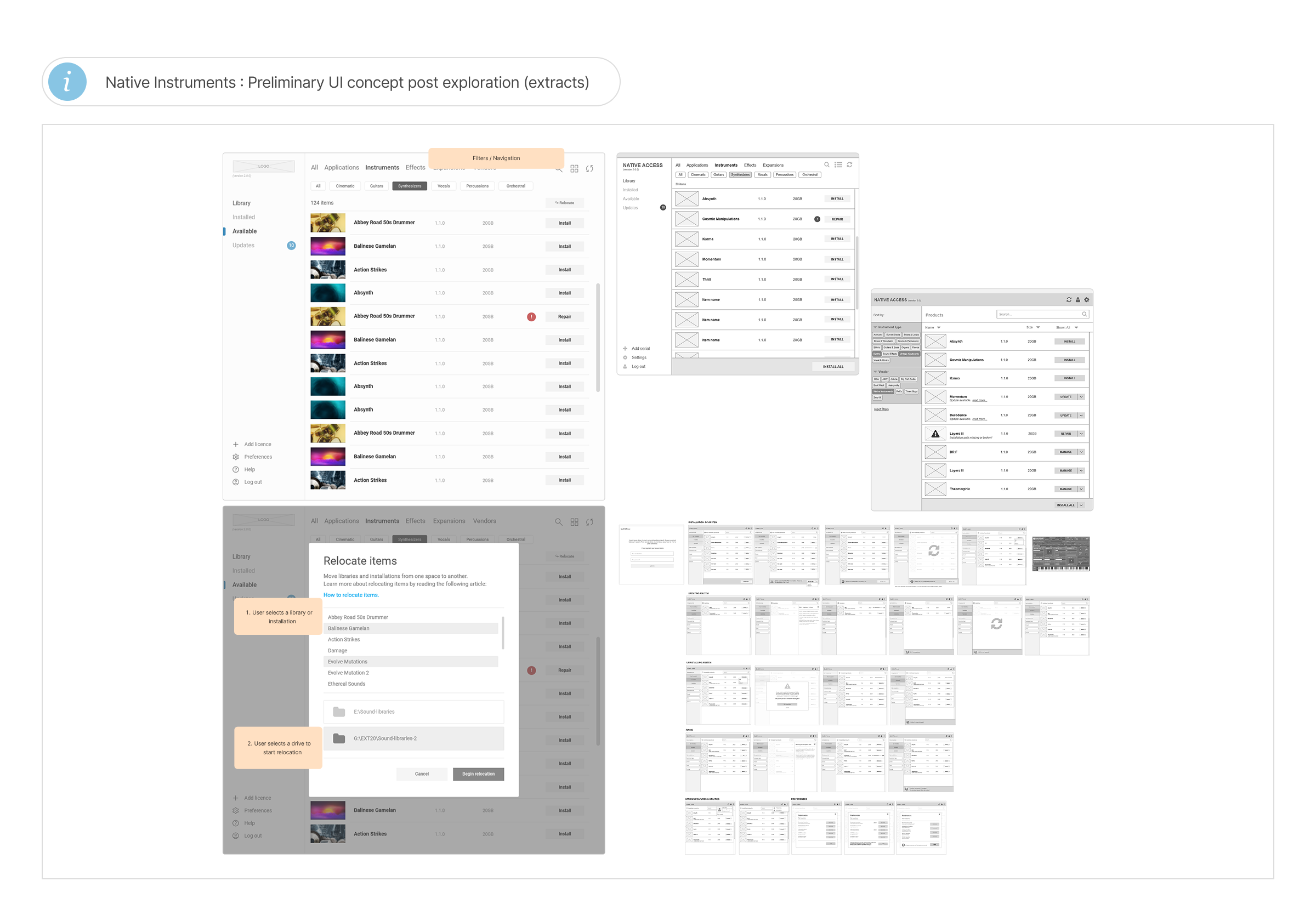
Advanced filtering and navigation
Improved product organisation
Installation dependency awareness
Enhanced system status and error visibility
Storage management tools, including the ability to relocate installed content across drives
A refreshed interface aligned with Native Instruments' updated brand identity

The result was a scalable platform capable of supporting both new users finding their footing and professionals managing extensive software libraries.

Impact

1 %
Reduction in support tickets
1 %
Revenue increase
1 %
Growth in monthly active users
1 %
Reduction in average setup time
Positive feedback from customers, media and content creators (YouTube)

My Role

Embedded within a cross-functional product squad, I owned the end-to-end redesign of Native Access in collaboration with Product Management, Customer Insights, Development, and Design. The scope extended beyond a single team to 4 additional product teams whose products are tied to Native Access. Thus, design decisions had downstream consequences across the broader Native Instruments ecosystem.   My responsibilities included:

UX strategy & discovery
Stakeholder alignment
Market & user research
Information architecture
Design & prototyping
User validation
Presenting findings & next steps to stakeholders

Understanding the problem

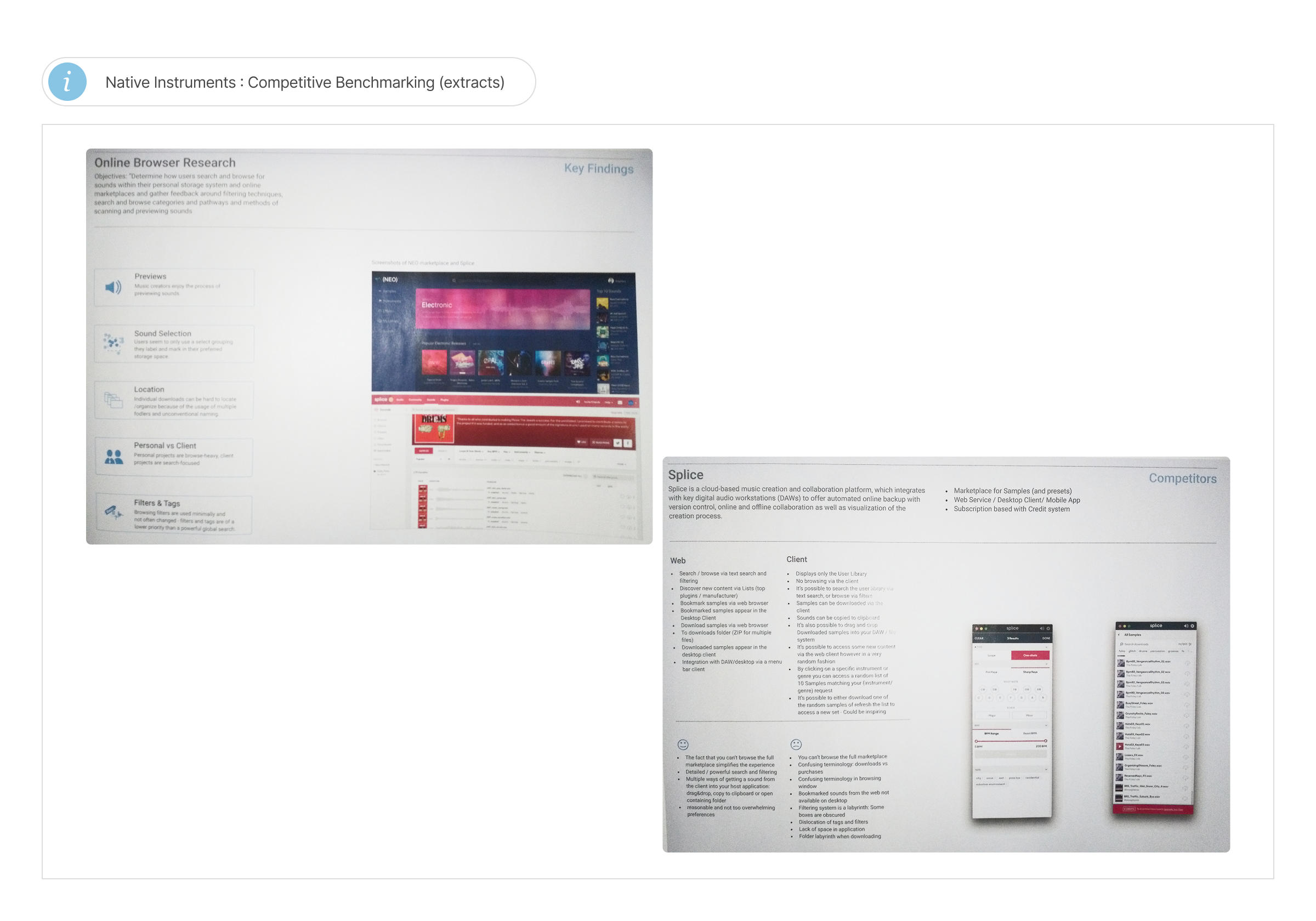
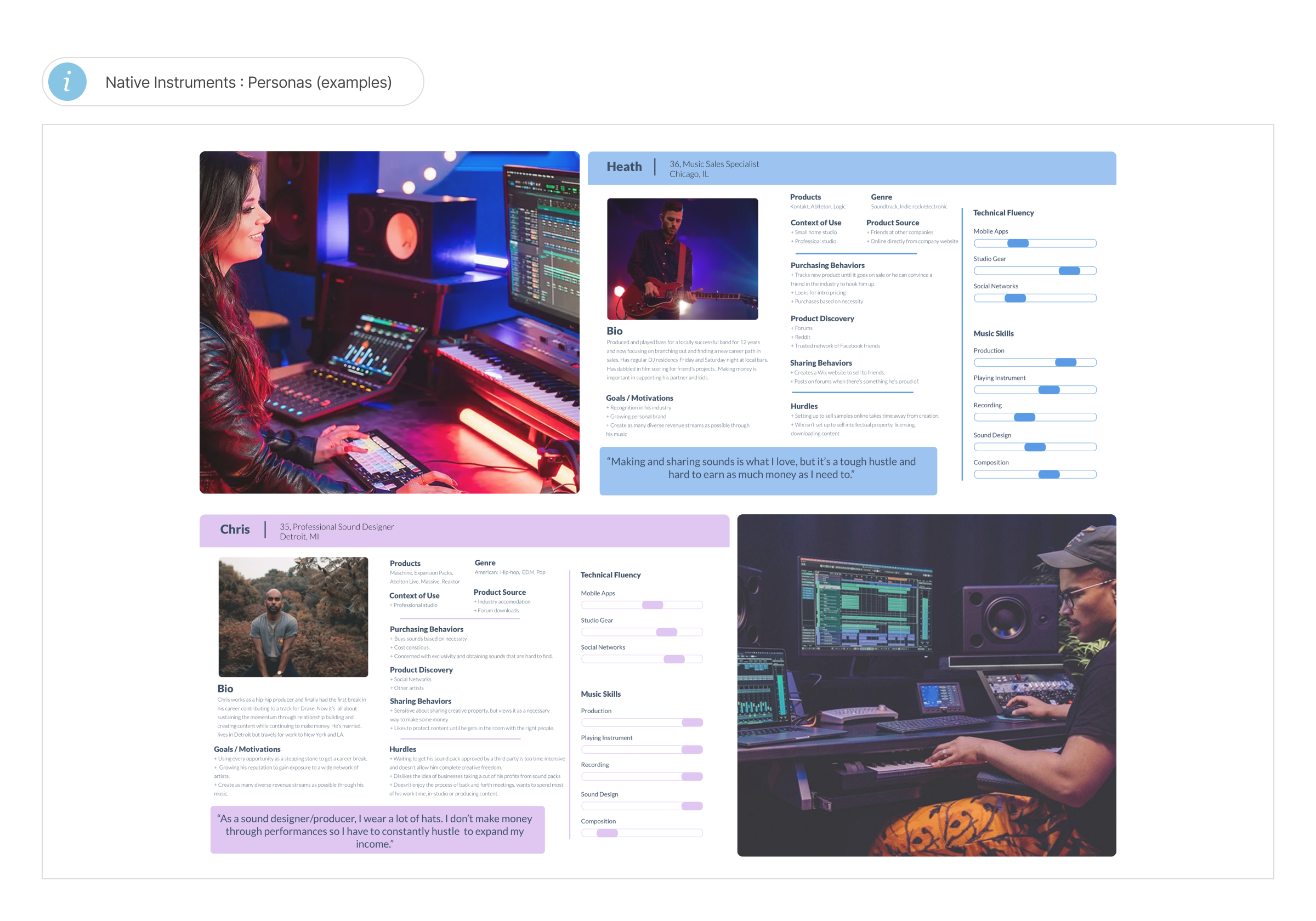
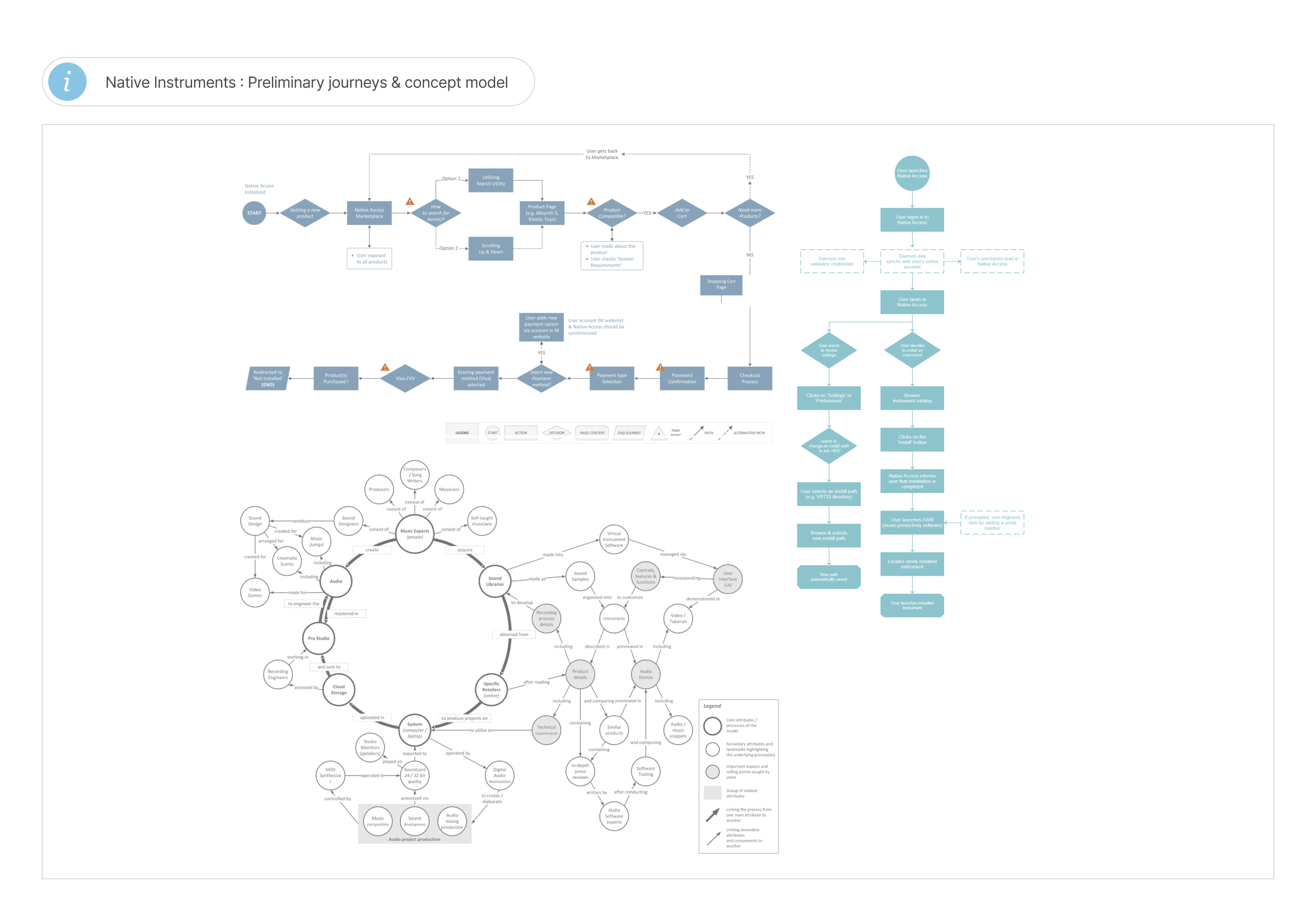
Working across five product teams, I synthesised customer research, competitive analysis, support feedback, analytics data, and business objectives to identify where users experienced the most friction. Four key outcomes emerged:

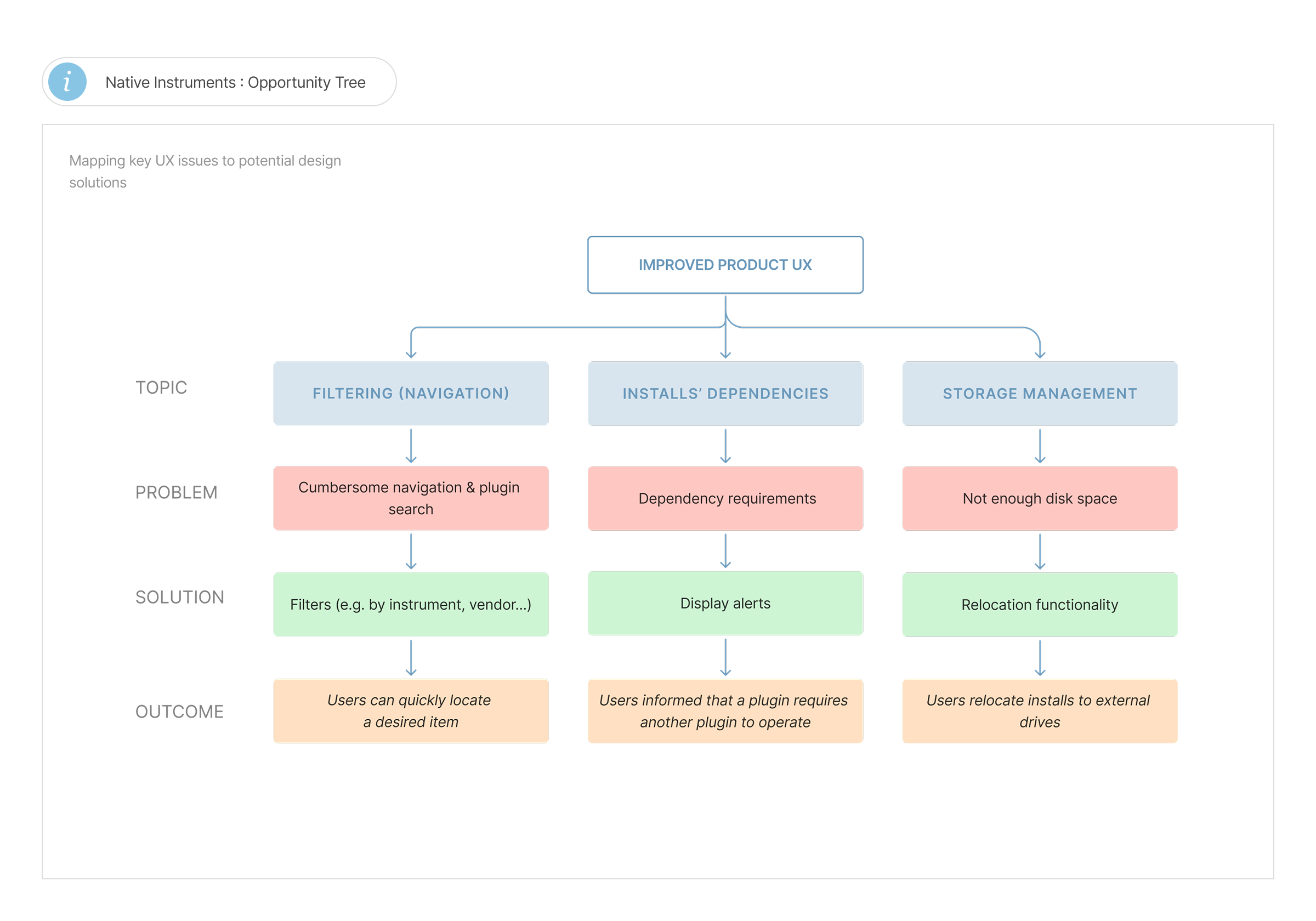
  1. Browsing and discoverability became problematic as the catalog of items owned within Native Access grew exponentially.
  2. Installation dependencies between plugins were invisible, leading to failed installations and avoidable support requests.
  3. Storage management was an afterthought, leaving users with no efficient way to manage large sound libraries across storage devices.
  4. Direct and indirect competing solutions delivered a world-class UX.

Together, these findings reframed the project from improving an installer to designing a platform for managing an expanding creative ecosystem.

Exploring solutions grounded in evidence

With over 1.5 million existing users, the central challenge was balancing innovation with familiarity. A radical redesign risked disrupting workflows users already relied on, hence why I emphasized retaining most of the product’s existing structure and touchpoints to safeguard users’ mental models and avoid steepening the learning curve.

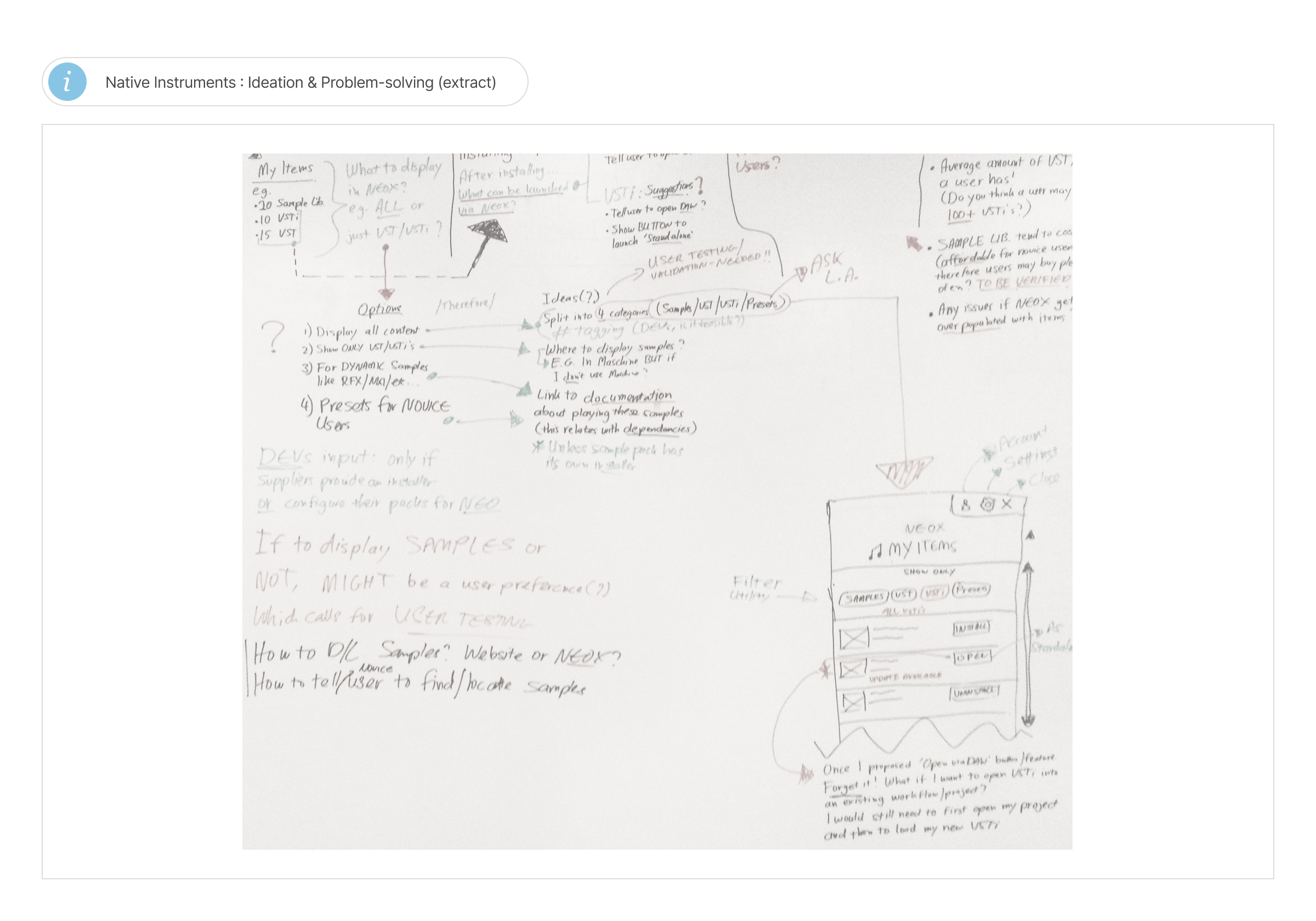
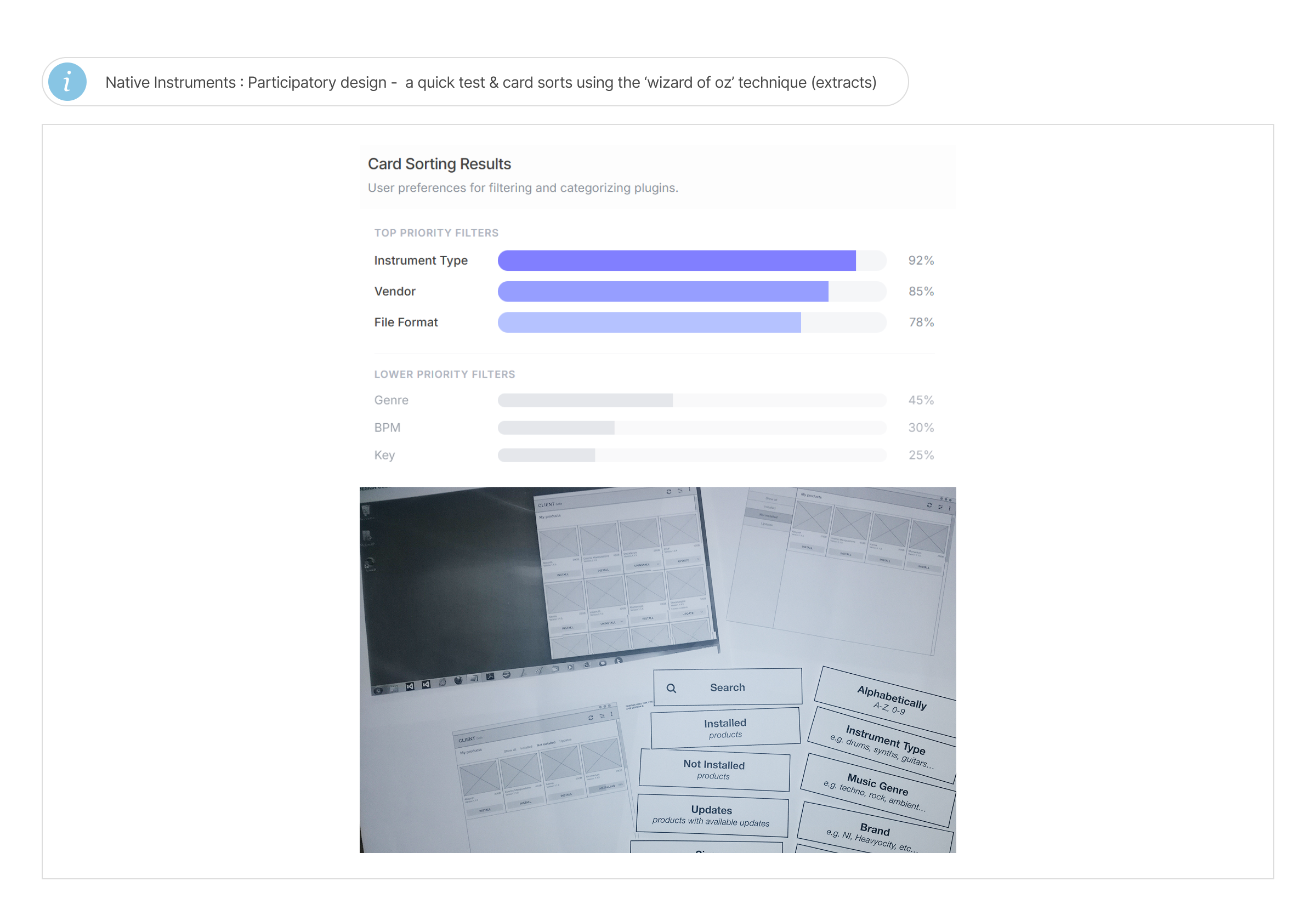
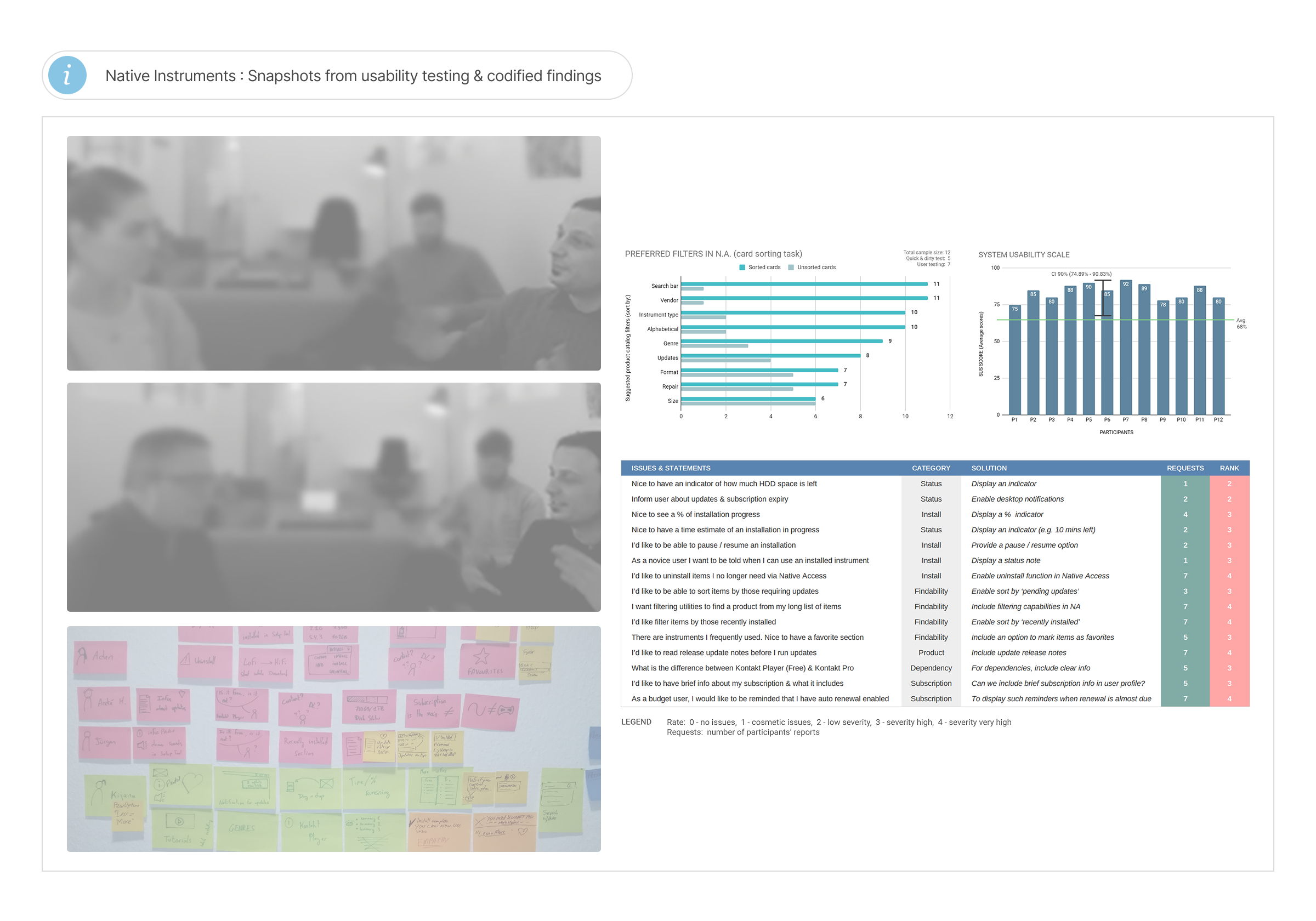
Through participatory design sessions, card sorting, and concept testing with existing customers, I progressively narrowed in on a scalable product vision. The work addressed all three core problems: redesigned navigation and filtering improved discoverability at scale; clearer dependency communication helped users anticipate and resolve plugin conflicts before they became blockers; and a novel relocation feature enabled users to move existing installations to external storage without reinstalling from scratch. Every idea was validated against both usability and technical feasibility.

Designing around how users actually work

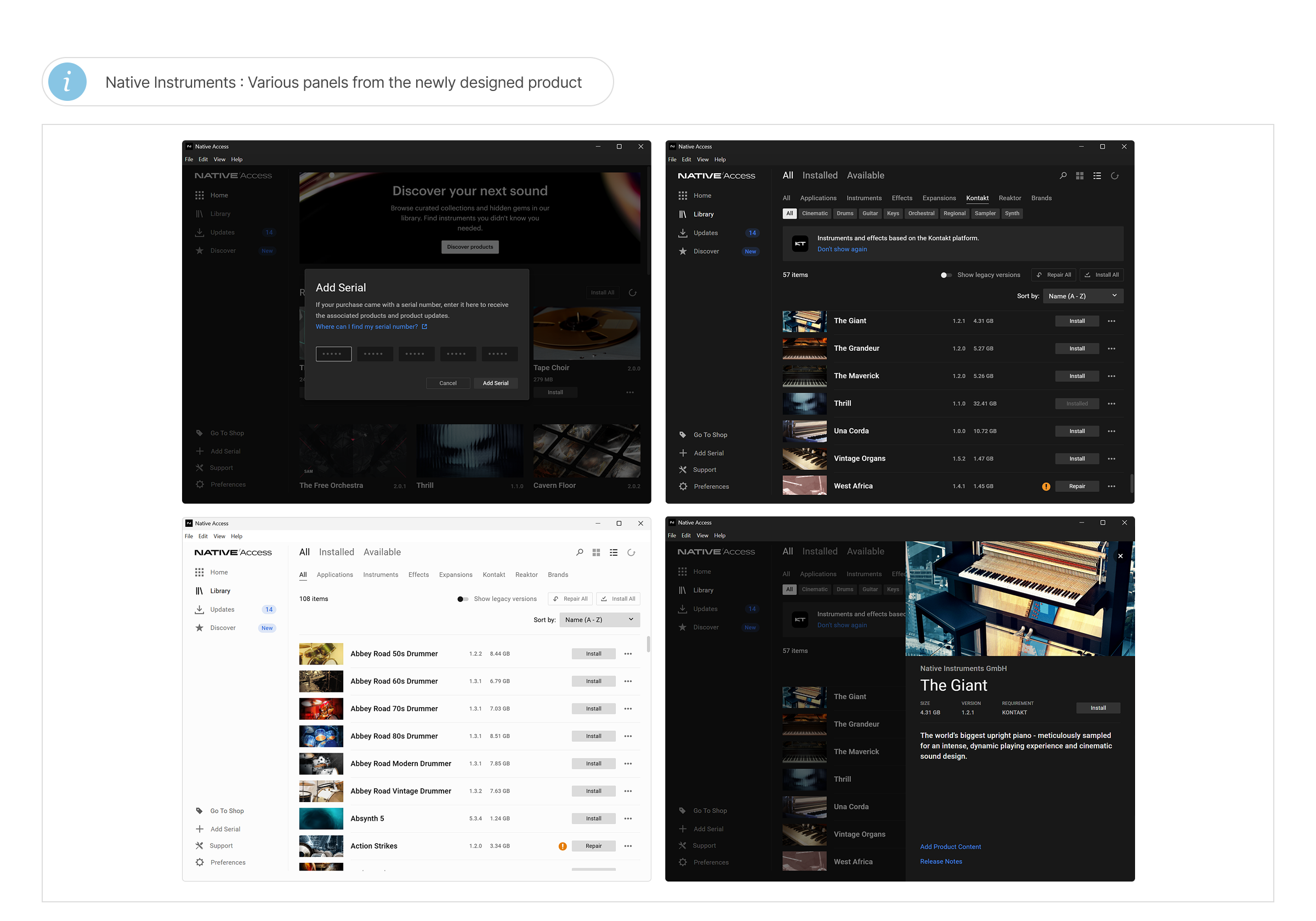
The redesigned Native Access transforms software management into a faster, more intuitive experience for artists and sound designers at every level.

Customers can discover products, manage installations, monitor system status, understand plugin dependencies, and relocate content libraries, all through capabilities designed around how users actually work.

The result is a platform approachable for new users and powerful enough for professionals managing libraries of hundreds of products, built to grow with its users.

Positive reception from users

Concepts were validated through moderated usability testing and customer surveys with existing Native Access users. Participants consistently responded well to the redesigned experience, highlighting improved navigation, clearer product organisation, simplified storage management, and better visibility of installation dependencies.

Crucially, the research confirmed that preserving familiar interaction patterns while modernising the overall experience successfully reduced friction without compromising existing user mental models.

native instruments

Showcase

In the video below, a user compared the old and new Native Access.  The user shares his hurdles navigating 200 assets and his delight at the inclusion of ‘filters’ within the software. Watch full video

Interested in learning more about my work & expertise?

Lets design with purpose and scale your business with impact.

More Work